


West Tn Box Score
Features
Explore the inspiring journeys of hometown heroes in our feature stories. From record-breaking victories to heartwarming comebacks, West TN Box Score brings you the latest updates on your favorite West-Tennessee athletes and coaches. Get an exclusive behind-the-scenes look at their training routines, game-day strategies, and personal anecdotes. We are committed to delivering in-depth coverage that captures the essence of High School Sports in our area. Join us in celebrating the triumphs and challenges of local athletes who continue to make a mark in the world of sports. Stay connected with West TN Box Score for all the thrilling sports action!
%20(2).jpg)
Celebrating Local Athletes and Coaches

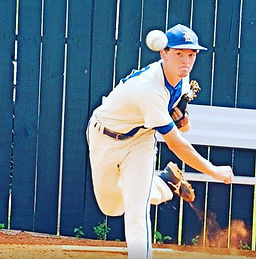

Remembering Riverside's Stephen Gant
As high school baseball draws toward its final inning, with only a handful of teams still standing, players and programs continue fighting for their place in Tennessee’s history books. As the Spring Fling begins, we wanted to turn back a few pages in those same history books and remember one of the finest players ever to come through West Tennessee: Stephen Gant. When you talk baseball with folks around here and wander down that familiar rabbit hole of the greatest players to ever wear a uniform in West Tennessee, one name rises again and again — Stephen Gant. Gant was no stranger to the Spring Fling. Riverside captured three state championships during his time there, and Stephen was a towering part of that success. How great was he? The story remains unfinished in many ways, but you cannot speak about the best to ever play in this area without his name entering the conversation. For me, this story carries a more personal weight. Long before I ever knew Stephen Gant, I knew his grandparents. His grandmother and mine were cousins, a couple of Tillmans, and his grandfather — who, to this day, I simply know as Preacher Gant — preached the sermon the night my dad gave his life to Jesus Christ. I often think about how that moment shaped my family forever. Scripture says faith comes by hearing, and I remain thankful for people willing to faithfully preach the Word. As I began gathering information for this story, I quickly realized how difficult it would be to write. Nearly every conversation became some mixture of awe, laughter, and long silent pauses as people tried to hold back tears. From a distance, I stood amazed at Stephen’s talent. But those who knew him best saw something even greater. I first caught a glimpse of him when I was coaching middle school basketball at Linden, and we played Decatur County every year. Stephen stood out immediately. He was one of those rare kids who carried a kind of divine spark about him. We had a loaded team coming up ourselves, and while he may not have been the best player on the floor at that moment, there was simply a presence about him. If you’ve spent your life around sports, you know exactly what I mean. I don’t know if “aura” is the right word, but you could just tell — this kid was different. And it really did not matter what sport he played. Stephen excelled at everything. He was a good basketball player, a great quarterback, an excellent student, and his baseball ability spoke loudly for itself. One of his former teammates told me, “Stephen was good at everything. He was so driven to succeed. If we played badminton and you beat him, he would go home and practice, and the next day he’d be the best player.” His high school baseball coach, Dusty Rhodes, echoed those same sentiments. “Stephen was the kid who, after a long practice, would go home, eat supper, do whatever he needed to do, and then you’d drive by later that night and he’d be back out hitting off the tee,” Rhodes said. “He was smart and had a lot of God-given talent, but it was his work ethic that put him over the top. When you put all three of those things together, you get a special player, and that’s just what Stephen was.” Coach Rhodes also spoke about Stephen’s baseball intelligence and instincts. “Stephen was smart and instinctive at the same time. He came from a baseball family. If he could throw by you, he would. If he needed to pitch to you, he would.” Going into his senior season, Stephen was probably best known for his pitching. He had signed with Vanderbilt and was considered a sure-fire first-round draft prospect. Everyone I spoke with mentioned the crowds that gathered whenever he took the mound. There would be over a 1,000 people at a Tuesday night baseball game when they knew he was throwing. Coach Rhodes laughed while remembering how opposing teams reacted when scheduling Riverside. All the best teams wanted to face him. “We got to travel and play some of the best competition in the state. When teams scheduled us, they’d always ask, ‘Are you going to throw Gant?’ I’d tell them yes — and after they faced him, they probably regretted asking.” One former opponent remembered, “The last time we faced him, he struck out sixteen. What separated Stephen was not only that he threw in the 90s, but the movement on his fastball. His stuff was electric.” Stephen Gant was named The Jackson Sun’s Baseball Player of the Year as a freshman, sophomore, and junior. During his junior season, he recorded 144 strikeouts — more than any number reported to West TN Box Score this season. But here is the remarkable part: nearly every former coach, teammate, and opponent I spoke with insisted he may have been an even better hitter than pitcher. When Vanderbilt coach Tim Corbin first came to Riverside, Coach Rhodes asked him a simple question: “Are you recruiting him as a pitcher or a hitter?” Stephen still holds Riverside’s single-season home run record, and his junior-year offensive numbers would rank first in nearly every major category compared to this season’s best hitters. “He’s the best hitter I ever coached,” Rhodes said. “He could adjust to any type of pitching and had such a great approach at the plate. When he was in the batter’s box, he was better than whoever was on the mound. And when he was on the mound, he was better than whoever was in the batter’s box.” During his years at Riverside, it all felt like something magical unfolding in real time. Stephen Gant remains one of the greatest athletes to ever come through West Tennessee, but his legacy stretches far beyond the baseball field. Many people did not realize how active he was with St. Jude or how deeply he cared for others. He was a great friend, an outstanding student, and — judging by the voices of those who knew him best — someone who left a lasting imprint on every life he touched. Though we will never understand why his story unfolded the way it did, I am reminded of a note written in my Bible: “Remember, there is a broken heart on every pew.” Stephen was gone far too soon. And while we remember the towering home runs, the electric fastballs, the championships, and the legend he became on the diamond, it was something else that stayed with me most while writing this story. It was the tenderness in people’s voices. The love. The ache that still lingers. Stephen Gant was a true West Tennessee legend — perhaps the best to ever do it. But more than that, he was far more than a ballplayer. He was loved! If you read this today and are struggling in any way, just remember, you are loved too! -Eric Hampton
Back in '82
Bruce Hayes
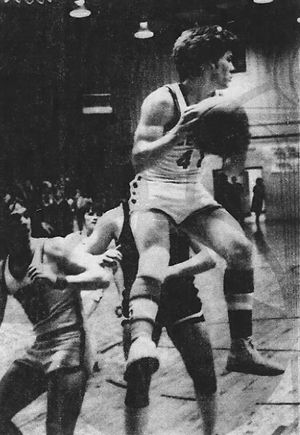
Spending a lifetime in sports, I’ve learned that every town keeps its legends the way old houses keep their creaks—faint at first, then suddenly vivid when the right story opens the door. It’s one of the very reasons I wanted to start the “Back in ’82” section on our website: to pause and pay homage to these figures who seem to live half in memory, half in myth. From a time when video footage just didn’t exist and photographs were few, it is the stories—passed along, burnished by recollection—that give these legends their staying power. I often joke that every town has its own version of Bo Jackson—the man whose feats sound too large to be true, yet are repeated with a kind of hometown certainty. For Sardis, that man is former Blue Devil Bruce Hayes, their Bo Jackson, in a manner of speaking. I first met Bruce in August of 1986. He was the countywide traveling P.E. teacher, fresh out of college, and I was a fourth grader at Scotts Hill. I’ve never forgotten that day, for Larry Bird was my hero, and this new teacher handed me a Basketball Digest he’d finished reading—Larry on the cover, mid-shot, eyes fixed somewhere beyond the page. I read that issue a million times, wore its corners soft and left several pages hanging on for dear life. I still have it to this day. When I got home, I couldn’t wait to show my dad my prize—and that was when I heard my first Bruce Hayes stories. Dad told me that, pound for pound, Bruce was one of the best athletes he had ever seen. He talked about Bruce’s basketball prowess, then added, almost as an afterthought, that he was an even better baseball pitcher. He told me about Bruce playing college baseball at Lambuth University, and the way the ball seemed to leave his hand with a kind of authority you don’t teach—a God-given talent few men possess. Over the years, it wasn’t just my dad. Story followed story, each one circling back to the same refrain: how athletic Bruce was, and—without fail—how hard he could throw a baseball. He was one of those rare players who seemed at ease in any arena, as if the games themselves bent slightly to his understanding of them. He was a natural. His high school basketball coach, Danny Johnson, told me, “Bruce was the best athlete I ever had. He was one of the best players in our district all four years, could play any position, and had the ability to play bigger than he was.” Danny continued, “He was such a hard worker and never complained, and to go with all that he was also an extremely smart player.” Coach Johnson really only had one issue with Bruce the entire time he coached him: “He was too unselfish at times. I couldn’t get him to shoot enough—unlike Randy (Bruce’s brother, who was also a great player), he liked to shoot. Bruce always averaged close to 20, but he could have easily averaged 25 or 30 if I could have gotten him to shoot more.” He added, “I didn’t really coach Bruce in baseball, but I watched him a lot. He was a very good hitter and did such a good job with his pitching—he could really throw it hard.” All that Coach Johnson said can be easily verified with a quick Jackson Sun archives search. You will find four straight seasons of 20-point games and big-time upset wins. His college baseball coach, Jack Russell, was quoted on Bruce’s arrival at Lambuth: “He is one of the best pitching prospects we have signed. He has a great arm and is very intelligent.” That line—“really throw it hard”—echoes through anyone who ever saw him pitch. Story after story, article after article, all allude to the strength of his right arm. Bruce himself told me of a back injury he suffered his senior year, something Coach Russell also mentioned in an interview. Bruce said he never truly got back to 100 percent—and that is a scary thought. He had a tremendous college career, and they never had to face the very best of his stuff. As I went through junior high and high school, Bruce Hayes was always one of my favorite teachers. At the time, I didn’t think much about why—I figured it was because he had been such a great ballplayer, and I wanted to be one too. But when I returned home and took a job at my old school, Bruce was still there. We co-taught a class for twelve years, and it was there, seeing him through adult eyes, that I understood. I realized why Bruce Hayes had been my favorite teacher—and why he was almost everybody’s. I came to see that, as great an athlete as Bruce was, he is an even better man. Sitting on the playground, kid after kid would come up to him. Whether the subject was sports or hunting, cars or trucks, food or school—it didn’t matter. He took a sincere interest in whatever they brought him. Every child walked away feeling, if only for a moment, like the most important person in the world. And to this day, no matter the situation, if I get the chance to talk to Bruce, I come away feeling like I’m somebody. His coach once said he was one of the most unselfish players he ever coached; I can tell you he is one of the most unselfish men I have ever met. There were countless small kindnesses—so quiet they might have gone unnoticed if you weren’t looking. I remember telling him about a man I’d met who needed work; before long, Bruce had found him a job. When someone needed firewood, Bruce cut it and delivered it. When there were needs at school or jobs to be done, you could always count on him. Some of my fondest memories are of him roping me into helping cook for the kids or the staff—the air filled with laughter and the smell of meat smoking on the grill, and beneath it all the steady, comforting rhythm of something good being done for others. As kids would go on to the high school and I’d bump into them, they’d ask, “Does Coach Bruce still play tag—no tag backs?” I just smile when I see a teacher with their back turned, because Bruce loved to sneak up and scare someone, and then laugh with that jovial, unguarded laugh of his. Since he retired, I still have kids ask me regularly, “Have you talked to Coach Bruce lately?” Yes, back in ’82 there was a mythical figure with a cannon for a right arm, whose athletic achievements are still talked about today. Yes, in his way, he was a Bo Jackson. But since 1982, this man has quietly touched more lives than could ever be counted. And while I still have this platform, I’m grateful—for the impact he had on me as a kid, and for the lessons he taught me as a man. For me, Bruce Hayes remains what all true legends become over time—not just larger than life, but deeper than it, too. -Eric Hampton
HARDIN COUNTY'S HEATH HARDIN
Who Do You Play For?
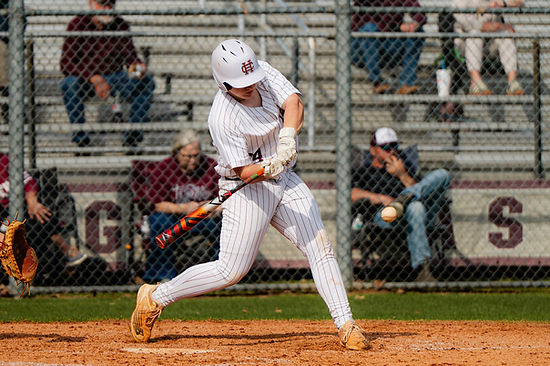
Heath Hardin’s talent on the baseball field is undeniable. After batting .480 as a freshman, he was named Super Freshman by the Tennessee Baseball Report. Entering this season, his name appeared on every watchlist imaginable, including multiple publications, and he was a preseason Class 3A Mr. Baseball candidate. So far, he has not disappointed. Once again, he is hitting for a high average and ranks among the top ten in West Tennessee in both home runs and RBIs. But his gifts are not confined to the batter’s box. He currently sits in the top ten in strikeouts and ERA as well, and by every account from those who have watched him, his best position may be behind the plate. Coach Creasy praised his work at catcher, saying, “Heath is a great catcher, knows the game, has a high baseball IQ, and manages the game at a high level. When he is behind the plate, we really don’t have to worry about anyone running on us; he shuts down the bases.” From the very beginning, Heath’s name has echoed as one to watch. The day I went to interview him, I had just finished recording a podcast with Coach Creasy and legendary coach Anthony Gilchrist. We had been discussing the long, rich history of Hardin County baseball—the names that linger like summer dust in the memory—when Coach Gilchrist, who has seen it all, offered rare and weighty praise: “Of all the great players we have had, this young man is the best hitter I have seen as a true freshman—the best freshman year I’ve seen here at the plate.” Coach Creasy followed with a story that captures Heath’s uncommon rhythm as an athlete, one that seems to carry from season to season without missing a beat. “Heath was really hyped up coming out of middle school, and I was like, we’ll see. He played three sports, so I go watch their first football game, and he was playing JV. He had 10 tackles, caught a pass across the middle, and took it 50 yards for a touchdown. I told Coach Beecham that Heath was going to be starting varsity by the end of the season, and by four or five games in, he was starting at middle linebacker. Then basketball rolls around, and he’s on the basketball team, so he’s not getting to do all the winter baseball development. We’re thinking, we’ll see when he gets here. We open with South Gibson, Cade Allen (one of our earlier features) is on the mound. Basketball ended Saturday, we did some BP Sunday, and Heath’s in the lineup Monday. We just threw him in there, and he had one of our two hits off Cade—hit another line drive, had two barrels off Cade. After that game, I thought, alright, Heath can swing it. This kid just walked off the court and got solid contact off one of the best arms in West Tennessee.” When I asked Heath where it all began, his answer carried the quiet gratitude of someone who knows exactly where his roots are planted. “My dad was a football player, and my mom was a basketball player. When I was really young, my dad would take me to hit after he got off work, and when he was working, my mom would take me. But what really got me going was my brother (Ashton Duke, who played at Adamsville and went on to play at Southwest), We’d be in the front yard, throwing as hard as we could at each other to see who would quit first. I’ve always looked up to him, and he pushes me to be the best player I can be.” I asked Heath what training looks like for him. I was curious about the day-to-day approach of one of the best young hitters in our area, “I really get in the cages, do a lot of tee work, top hand, bottom hand, really try to keep it simple. If you put the work in the cage and then you're ready for whatever pitches they throw at you, but the main thing is I try to keep it simple.” Heath continued, “In season, I just try to keep my strength, but in the off-season, I hit the gym hard and try to build my strength.” Having arrived at Hardin County at the same time as Coach Creasy, Heath has embraced the process. “I’ve loved playing for Coach Creasy. Starting together—he’s done a great job.” But it’s not just Coach Creasy Heath plays for. As we talked, he showed the maturity of someone beyond his years. You could hear the appreciation he had for his parents, who got him to the cages to hit, and his brother, who first sparked his interest in baseball. You could tell he was aware of the History of Hardin County baseball and those who came before him and what it means to put on that Tiger uniform. You could hear the admiration for his current head coach and all he pours into the program. But….. When I asked this young man what role faith plays, if any, his entire demeanor changed; there was an excitement that was a blessing to me. As his face lit up, with no hesitation, what had been thoughtful shifted to joyful. “Absolutely, he’s my Lord and Savior, everything I do is for Jesus, everything I do is because of him. With every homerun, I draw a cross on my chest and point up to him. Because of him, I’m able to play this game,” but what he said next really grabbed my attention. “Before every at-bat, I draw a cross in the dirt to represent who I’m playing for.” Those words made my heart leap. Before every game my daughters played, I would ask the simple question, Who do you play for? Coach Creasy affirmed what those words suggested. “The main thing about Heath is the person he is off the field—he takes his faith seriously. I give him a hard time because he missed one FCA,” he said with a grin. “He brings guys with him to FCA, takes guys to church, and lives out his faith. He’s already a great leader for us, both on and off the field.” With a clear sense of those who have helped him along the way, it is ultimately his faith—fixed on something greater than the game—that sets Heath apart. There is something deeply grounding in knowing who you play for, where the glory goes when the ball clears the fence or settles into a glove. Baseball will likely carry Heath Hardin a long way. His talent all but insists on it. But even beyond the diamond, there is a sense he will go far in whatever he chooses to pursue. And as seasons turn, as they always do, it will be worth watching—not just what he accomplishes, but how he carries himself along the way. -Eric Hampton
Hollow Rock-Bruceton Central Lady Tigers Softball
Big Game, Bigger Hearts!
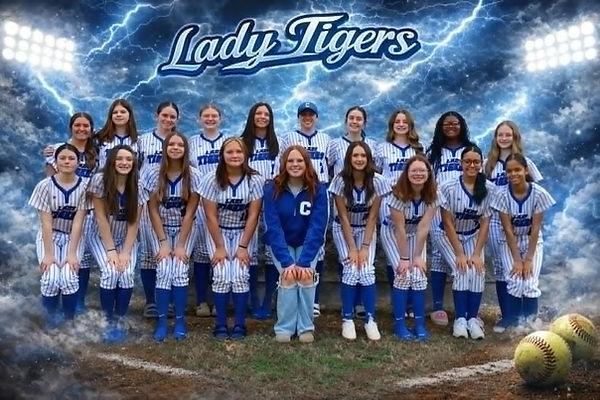
When I arrived at Hollow Rock-Bruceton Central, I had a few questions before getting to my main reason for visiting. In Scotts Hill, we always just called it Bruceton. When I started coaching, it was Bruceton-Hollow Rock. Now, I often see it as Hollow Rock-Bruceton. After a brief history lesson—and learning that this has, at times, been a point of contention—I’ll go with Hollow Rock-Bruceton for the sake of this article. I could just say Central Lady Tigers, but then no one might know who I’m talking about. Arriving on campus brought a flood of memories. I graduated from a K–12 school myself, with a class of 48. The feeling was familiar—the hum of small hallways, the closeness of it all—and I’ve always loved small-town athletics. Hollow Rock-Bruceton is one of the smallest schools in the state, yet from this compact corner has grown one of the best softball programs in Tennessee, regardless of classification. There’s something about a place where everybody knows your name that seems to sharpen both pride and purpose. I had the pleasure of sitting down in the coaches’ office with head coach Jamie Williams and assistant Summer Davis to talk about what they’ve built. But before I could even get a question out, they redirected all the praise to their players. “Its 18 great players, it's the kids, we are just here enjoying the ride,” Coach Williams said. And no sooner had those words settled into the room than in walked the reigning Class A Miss Softball, Madison Holder, along with All-District performer Lilly McGee. Yet the players’ first words echoed the same deflection, sending the credit right back where it came from. “It's been a great experience playing here, I have very good coaches, and I have been blessed with great players as teammates with great attitudes, relationships, something that will be with me forever,” Madison said. Then, with a smile that seemed to carry years of shared innings, Lilly added, “I love playing on our team. I used to play travel ball a lot, but there's nothing like our team. I have played with Madison forever, and that relationship you have just makes your team better.” It has been an unbelievable run—three straight trips to the state tournament—and Coach Williams can see the growth in his team. “They don't let things bother them anymore. In the past, we would be intimidated playing bigger schools; now we look forward to playing them,” he said. “Last year didn’t end the way we wanted it to. We lost in the state championship game, we have finished second and third. Now, there is one last step for this team to take, and were looking forward to the challenge of trying to make it.” The girls embrace the small-school identity like a well-worn glove. “I started in Tee Ball and then played 10U for Coach Davis. You stick with everyone from a young age because it is such a small town, and you build these relationships, and you play so much better.” Madison said. Lilly added, “I like being the small school, showing up and beating all the big schools.” And beat them, they have. The Lady Tigers shy away from no one when building their schedule. “When we first took over, the schedule wasn’t nearly as competitive as it is right now. The level of competition we play now is just above and beyond what most people's schedules are.” So far this season, at the time of this writing, their only loss was a one-run game against Collierville—a program with nearly 15 times Hollow Rock-Bruceton's enrollment. But it’s more than a tough schedule. Plenty of teams play tough schedules. It’s more than good coaching, though that is certainly present. And it’s even more than talent, though talent runs deep here. So what is it that makes the Hollow Rock-Bruceton Central Lady Tigers so special? After spending a morning there, I have a theory. It’s love. One of my favorite thoughts on Christianity is how do you know where it's at? “They will be known by their love for one another.” And in a way that feels both simple and profound, you can see that same truth alive in this team. You can spot a great team by that measure, and this is a great team. Coach Davis also leads the middle school program, providing a rare continuity, but she isn’t alone in the effort. She told me, “Every practice, these High School girls are there helping out and pouring into our younger kids coming up, it is just a great reflection of the kind of people they are.” And that reflection shows up everywhere. “1 through 18, I feel like our work ethic is hard to match because all these girls do what is right, put time in on their own, do what we ask as a team, and then go work in other areas, they work their tails off.” Coach Williams shared. There’s a quiet pride in the way they talk about one another. When I heard about an eighth grader batting over .600, there was no jealousy—only excitement that I should meet her, too. “You rarely hear any of our girls say the word I, it is always we, and we try to reinforce that attitude every day, that it is us, we want these girls to be as great off the field as they are on it,” Coach Williams said. Later, trying to put it all into perspective, Coach Williams shared a conversation from the start of the season. “The girls told me, ‘We hope the baseball team can make it to state this year,’” he said. “Our girls don’t just care strictly about softball, they truly care about our entire school, our community; they have big hearts.” They will be known by their love for one another. Coaches who care deeply for their players. Players who care deeply for their community. And whether you call it Bruceton-Hollow Rock or Hollow Rock-Bruceton, those big hearts make it easy to see why this team has found so much success. Big game, bigger hearts. And when the Class A state tournament rolls around this year, I know exactly who I’ll be rooting for. But win or lose, this kind of love outlasts trophies, rooted deeper than any championship run could ever reach. “Lay not up for yourself treasure upon earth, where moth and rust doth corrupt, and where thieves break through and steal: but lay up yourselves treasure in heaven, where neither moth nor rust doth corrupt, and where thieves do not break through nor steal: For where your treasure is, there will your heart be also.” —Eric Hampton

SOUTH GIBSON'S CADE ALLEN
MORE THAN A FASTBALL
When we started gearing up for baseball season, one local name kept rising to the surface, the way certain names always do when the talk turns from winter gyms to spring diamonds — South Gibson’s Cade Allen. It was no shock to hear that he was an outstanding player. I used to work at South Gibson County with his mother, Heather, an assistant basketball coach, and his older sister Hallie — now a starting guard at Campbellsville, fresh off a run to the Final Eight — once played AAU ball with my daughter when they were kids. I followed his younger sister Acie and the Lady Hornets this past fall, and his father, Blake, climbed as high as Double-A in professional baseball. In the Allen household, sports have never really been an activity; they have been part of the rhythm of daily life, as natural as supper on the table or lights coming on at dusk. So, with all that said, and with us planted firmly in Vol country, doing a story on Tennessee commit Cade Allen felt less like a decision and more like the next page turning on its own. A quick Google search will tell you plenty about Cade Allen and his baseball prowess. Between Perfect Game and Prep Baseball Report, you can find the 95-mile-per-hour fastball, the spin rates, all the velocities, the travel teams, the time with Team USA, even national rankings and a Sports Illustrated article on his UT signing. Modern baseball can feel like a language spoken in numbers, a game measured in decimals and radar-gun readings, where every pitch leaves a trail of data behind it. With recruiting services, GameChanger apps, and analytics layered on top of analytics, the whole thing can leave a man a little dizzy if he stands too close. But I come from a different time, or at least I still lean that way. I have never been as interested in the numbers as I am in the man. Stats tell you what happened. Character tells you what will. And for me, that is where the real story always waits. Although I knew the family well, I had never actually met Cade until the night I went to interview him. South Gibson had just taken a tough loss to my alma mater, Scotts Hill, and Cade had struck out in the final inning. It is not the easiest moment to walk up to a young man with a phone recorder in your hand. But when he came out of the dugout, there was no slumped shoulder, no thrown helmet, no trace of the storm that usually follows defeat. His head was up, his eyes steady, and when he introduced himself, he looked me square in the eyes and gave a firm handshake — the kind that tells you something before a word is spoken. That brief, five-second exchange told me more than any stat sheet ever could. As we stood and talked, he only confirmed what the handshake had already said. He was grounded, humble, and serious about becoming the best version of himself, which is a rarer thing than throwing 95, no matter what the recruiting sites say. When I asked Cade where it all started, his answer sounded like the beginning of a thousand ball stories. “My dad was a big factor. All my coaches from teams and travel ball, too, but on the pitching side, it was mostly my dad. He played in the minors, so he knows a little something.” When I asked his Dad Blake about it, he said, “It’s been fun. Took years for him to finally listen to me,” he said.laughing “A lot of the time, he didn’t, but one day it clicked. We were playing in Millington in a championship game. I went out to the mound late, told him we had two more outs, and I can go to somebody else, or do you want them? He looked right at me and emphatically said, ‘I want them.’ From that day forward, something clicked with him. He started learning how to pitch more, how to work hard, and everything I’d been saying finally clicked with him.” And once it clicked, it clicked all the way. Cade became one of the top pitchers in the country, but like most things worth having, it came with a schedule that leaves little room for comfort. “I throw on Monday, do my start, then lift heavy the next day with some throwing mixed in. A couple of days later, I’ll long toss, then bullpen on Friday, leading up to the next start. Light 120 ft throwing on the other days.” The work paid off. Blake remembers a game that seemed to turn the road in a new direction. “He was playing with the Memphis Tigers against the Dulins Dodgers, the number four team in the nation. He came in relief, pitched four innings, struck out nine, and gave up no hits. The USA pitching coach was there, saw him, invited him to try out, and he made the team.” “It was crazy,” Cade said. “Great experience, traveling with those players and coaches. That was the best talent I’ve ever been around. Players from California, Texas, everywhere. Just to be part of that and compete with those guys — it was special.” Cade was able to parlay all that success with Team USA into multiple college offers. He talked about the recruiting process, “It was hectic at first, I whittled my options down to about 5 visits, Tennessee was my fourth visit, and as soon as I got on campus, I knew Tennessee was the place for me.” The road since then has not been without its turns. A little over six months ago, Cade underwent full reconstruction Tommy John surgery and will not pitch this season, the kind of pause that can test a young player’s patience as much as his arm. But his approach has not changed. “Just trying to fit in my role this year. It’s different not pitching, but I’m staying positive, doing my part in the box, being a good teammate. I started my throwing program a few weeks ago, finished my hitting program about a month ago, and hopefully I’ll be throwing live sometime this summer.” Coach Lin Cates has watched the process up close. “He’s worked so hard just to get back anyway he can. We’re glad to have him hitting every day, but he’s also in the bullpen helping the other guys. He’s like an extra coach sometimes. They don’t make them better than him. He’s a great player, but more than that, he’s a great teammate. He looks after the younger guys, never big-leagues anybody. He lifts people up.” And while Cade wants to take baseball as far as he can, “Hopefully to the big leagues one day,” Baseball is not the biggest thing. “Faith is my number 1 priority, family, then baseball. I try to give everything I can to Jesus first.” As he continues his rehab, the numbers will come back. The radar guns will light up again, the spin rates will climb across phone screens, and the recruiting sites will keep counting what can be counted. But if I were a betting man, it wouldn’t be the numbers I’d put my money on. I’d bet on the kid who can walk off the field after a tough loss, look a man in the eye, and offer a firm handshake. I’d bet on the one who talks about faith before fastballs. I’d bet on the one who understands that the game, like life, is less about how hard you throw and more about how steady you stand. And that is why I believe Cade Allen is going to do great things — not just in baseball, but in whatever innings the good Lord gives him to play. -Eric Hampton
Scotts Hill's Katie Harper and Lacey Maness
Good Cop
Bad Cop
Katie Harper and Lacey Maness have formed the battery for the Scotts Hill Lady Lions softball team for the past three seasons, and what they’ve accomplished places them among the best duos in school history. Katie has been All-District all three years on the Hill, recording 345 strikeouts along the way. She was named District 13AA Pitcher of the Year last season, helping lead the team to a district championship. Her battery mate, Lacey Maness, is also a three-time All-District selection, with two 13AA Defensive Player of the Year awards and last year’s District MVP to her name. As freshmen, the pair carried Scotts Hill to the Spring Fling; last year, they were district champions. But numbers, awards, and titles tell only a fraction of the story—one still being written. There is more to these two friends and teammates, which brings us, naturally enough, to the self-proclaimed: Good Cop, Bad Cop. Assistant Coach Chloe Austin brought the two young women by the gym to sit and talk, and from the start, there was an easy, unmistakable rhythm between them. You only have to be around them for a moment to sense the connection—made all the more striking by how different they are. Lacey is quieter, more serious, an introvert if you will. Katie is buoyant, quick to laugh, and has her own vlog, the kind of personality that seems to carry its own light. Over the past few years, you can see how their differences have worked in tandem, each rounding the other into something better. As we talked, Katie would draw laughter from the usually reserved Lacey, while Lacey, almost instinctively, kept the conversation anchored. It felt a bit like a friendlier version of The Odd Couple, though that comparison never quite settled. The basketball player in me remembered a combo from NC State, named Chris Corchiani and Rodney Monroe, who were dubbed Fire and Ice. When I mentioned it to the girls, they kind of laughed and told me we sometimes go by, good cop, bad cop. Katie explained, “Lacey is a little blunt sometimes with the girls.” Lacey cut in, quick and certain: “You have to be.” Katie smiled and finished, “She tells it like it is, then I come in and smooth it all out.” By the end of the conversation, the nickname felt less like a joke and more like the truth. They moved together in that familiar, practiced way—two voices, one intent—like partners who know not just the play, but the pause between plays. When we were done, I thought I had been hanging out with the female version of Starsky and Hutch. In a community where many athletes grow up side by side, I assumed they had known each other forever. Not so. They didn’t meet until their freshman year. “I moved up here from Louisiana a couple of days before freshman year started,” Katie said. “When I got here, I didn’t know anybody.” “I didn’t know anything about her,” Lacey recalled. “I first met her at softball in January, and I was like, who is this? We’ve been best friends ever since.” It didn’t take long. Pitcher and catcher, they arrived as freshmen and made an immediate impact, leading Scotts Hill to the Spring Fling in their first season together. Yet even now, the loss there lingers. When they talk about it, you see their bond even more clearly, although different in personality, their voices fall into a kind of shared cadence. “We should have won our first game,” Katie said. “A couple of errors cost us. We were pretty nervous being on that stage as freshmen.” Without pause, as if completing the same sentence, Lacey added, “We didn’t hit.” We talked for nearly an hour, and the pattern held—two distinct personalities, speaking with a single purpose. They haven’t returned to the Spring Fling since that freshman season, something both are intent on changing. When asked about this year’s goals, their answers were as direct as you’d expect: “Go back to state.” “Win more games.” Like most athletes at this level, they’ve developed routines—but, true to form, theirs differ. Both started playing at age four. “When I was 11, I started travel ball,” Katie said. “I go to pitching lessons on the weekend, but it comes pretty natural. I’ve been doing it so long. I used to pitch a lot when I was learning, but now I just go and throw.” For Katie, the game, though serious, doesn’t consume her. She doesn’t plan to pursue softball beyond high school. Still, when she’s there, she competes—fully, fiercely—intent on finishing well. Lacey’s path is different. “I started playing travel ball at age 6,” she said, drawing a wide-eyed look from Katie. Signed to play at Northeast Alabama, Lacey continued, “I’m more of a keep working, keep working. I love the sport, so I can be out on the field for hours, and I’m still getting ready for college.” Katie grinned. “Not me—I’m here to have fun.” I asked who calls the pitches. They told me, “Coach (Tyler) Sowell usually lets Coach Chloe call the pitches.” They said together—then exchanged a knowing smile. “We have our own signals the coaches don’t know about,” Lacey admitted. “And sometimes,” Katie added, “if I disagree with Lacey, I’ll just throw whatever I want.” I asked Lacey if that ever caught her off guard. “No,” she said. “When you catch the same player for three years, I always know what’s coming. I can tell.” This season has brought adjustments. Due to circumstances, Lacey has been playing shortstop. “It’s kind of weird not being behind the plate,” she said, though she’s handled the change with characteristic steadiness. Listening to them talk about the game reveals as much as watching them play. At one point, Lacey began to say she felt she was struggling at the plate. Before she could finish, Katie interjected, “She is not struggling. She’s hitting it hard—just right at people.” They are not only good friends, but competitors and leaders, each in her own way, and both grounded in something deeper. “Faith has played a big part in everything I do,” Katie said. “I know Jesus has a plan for me. That was big when we moved up here—a new high school, and I knew no one. Now I know everybody. I trusted it was part of His plan.” Lacey echoed the sentiment as she looks ahead to Alabama. “I know He has a plan for me there.” As it happens, both plan to become teachers. “I’m going to be a math teacher,” Katie said. “I can’t wait to be involved in everything at school—I love homecoming week.” “I want to be a teacher and a coach,” Lacey added, smiling. “I’ll be the serious one.” Katie laughed, conceding she might coach one day as well. The Good Cop, Bad Cop pairing has made a believer out of me. I find myself hoping they finish this run the way it began—at the Spring Fling in Murfreesboro. And somewhere down the line, if I were an athletic director, I might start laying the groundwork to bring them back together again, this time on the same sideline. Every program needs its balance—its candor and its kindness, its edge and its ease. And these two, in their quiet, complementary way, may already be among the best in the business. -Eric Hampton

WHEN THE BALL STOPS BOUNCING
AN EDITORIAL ON SPORTS AND LIFE
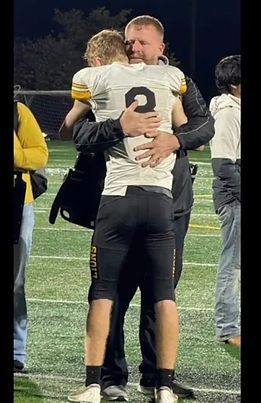
“How can a game have such an effect on a man’s soul?” That question is asked in one of my favorite sports movies, 7 Days in Utopia. The reply comes quickly: “The way I see it, how can it not?” Every kid I have interviewed this year, I’ve asked the same question: “What are you going to do when the ball stops bouncing?” It is a question I ask with genuine interest, because years ago, when that day arrived in my own life, I did not have an answer. I’m old enough now to have seen sports from nearly every angle and to witness many different responses when that moment finally comes. I have seen the beautiful side of sports—the fellowship, the discipline, the joy. And I have also seen and lived what can happen when someone is not prepared for the end. This is the time of year when many basketball careers quietly reach their last chapter. I have read at least four long Facebook posts recently—posts probably more poignant than anything I can write on the subject. I have even seen my own memories appear again from the nights my daughters played their final high school games. One of the first posts we made this year included the picture that accompanies this article; the young man in that photo happens to be a neighbor of mine. And so, with the season closing in many places, I thought I would take my own stab at reflecting on the moment when a sports career comes to an end. Growing up as a coach’s son, playing for multiple Hall of Fame coaches, and later coaching for more than twenty years myself, I have heard the same hopes repeated by parents again and again. When people get their children involved in sports, their aspirations are usually the same. They want their kids to learn the value of hard work, the necessity of sacrifice, the beauty of teamwork, the courage to compete, loyalty to others, and the pursuit of a common goal. They want sports to teach life skills—lessons that will help their children overcome adversity and function at a high level long after the final whistle. Yet somewhere along the way the conversation often pivots. Someone will say it should just be about fun. But the truth is, hard work and sacrifice are rarely fun in the moment. Others will say it shouldn’t be about winning—that it’s only a game. I understand the spirit behind those sentiments, but without the pursuit of winning—without striving toward a shared goal—it becomes difficult to teach things like hard work, teamwork, and sacrifice. Without those struggles, it is hard to know the joy of victory, and just as hard to feel the sting of defeat that shapes character. The pursuit of winning matters. My wife is currently in the third trimester of a high-risk pregnancy, and when the day arrives for that baby to be born, I certainly hope the doctor on call believes winning matters. I hope he or she fights for us, works for us, and pours every ounce of skill and energy into winning that day. The pursuit of winning is important. As Scripture says, “Run in such a way as to win the prize.” The same is true for a young athlete who throws himself into the pursuit of victory. If it truly becomes the goal, they will put in the work. They will support their teammates. They will accept their roles. They will experience both soaring joys and deep heartbreaks. And through it all, they will become better men and women. Ah, but here is the catch. When you pour so much of yourself into something, if you are not prepared—if you are not grounded—it can leave a void when it ends. I had given my life to sports, and when it stopped, I did not know what to do. I tried many things to fill that hollow space, and none of them worked. I have read the stories of men like Pete Maravich and Mickey Mantle, and the struggles they faced when the ball stopped bouncing, and I relate to them. It can be a dark place. I’m not sure you can truly do sports right without it leaving a profound mark on your life. The question, it seems to me, is who are you playing for? For a long time, I was playing for recognition, and when it was over it left me empty. Only when there was a surrender to something bigger than myself did peace finally arrive. As the Scripture says: “And whatsoever ye do in word or deed, do all in the name of the Lord Jesus, giving thanks to God and the Father by him.” Sports teach many noble things. We hope our children carry those lessons with them long after their playing days end. But without something greater at the center, those lessons can unravel quickly. With the right captain guiding the ship, however, those same lessons become powerful tools in the box of life. And when that day finally comes, and the question, “What will you do when the ball stops bouncing?” arrives, the question no longer feels so heavy. Instead, it becomes a question that almost guarantees a hopeful answer. How can a game have such an effect on a man’s soul? The way I see it—how can it not? -Eric Hampton
West TN Box Score Baseball/Softball Preseason Preview
I am a basketball junkie—there’s no denying it—but like most kids who grew up in the early ’80s, baseball was my first love. Before the squeak of sneakers on varnished hardwood ever echoed in my chest, there was the thud of a fastball in a worn leather glove and the long, patient hush of a summer evening. It is my little boy’s favorite sport now, and I understand why. Second only to the smell of a freshly finished gym floor is burying your nose into your baseball glove and breathing in that leather—earthy and timeless, like the game itself. As a kid, finishing a t-ball game and then stopping at B-Mart on the way home to buy a pack of baseball cards wasn’t just a ritual—it was a sacrament. You’d tear into the wax like you were opening treasure from some faraway land, hoping for a hero, settling happily for a utility infielder, and memorizing every stat as if it were Scripture. Those memories are more precious than gold; they shimmer in the mind like a late July sunset over a dusty infield. My favorite team was the Detroit Tigers, partly because Magnum, P.I. was my favorite show growing up—how could you not pull for a club whose cap was worn by a mustached hero in a Ferrari?—and partly because Kirk Gibson was my favorite player. Gibson played the game like a man chopping wood: violent, honest, and without apology. I still challenge you to go to YouTube and search Sparky Anderson “He don’t want to walk you.” Watch Gibby dig in against Goose Gossage, watch him take Goose yard, and listen to Sparky’s voice rise with the glee of a prophet who has seen what’s coming. It is thunder meeting will, bat meeting ball with a crack that seems to split summer itself. If you can witness that swing—the defiance in it, the certainty—and not feel a chill run down your spine, you may not be a sports fan. How could anyone grow up around that and not love the Tigers? And the movies—oh, the movies. Long Gone (Bull Durham before Bull Durham) had grit and gravel in its voice. Field of Dreams felt like it had been written in heaven’s own longhand. Major League is still comedy gold. I tear up at Bang the Drum Slowly and The Pride of the Yankees. I quote For Love of the Game and The Bad News Bears. My kids love Little Big League and Rookie of the Year. Baseball captures the imagination of youth and the hearts of those cheering them on. It is both boyhood and memory, stitched together with red thread. I don’t yet know exactly what our softball and baseball coverage will look like here at West TN Box Score. I don’t have as many connections in this corner of the sports world—but I’m working on it. I’ve been texting and calling coaches, reaching out to athletic directors, and connecting with folks in sports media. I’ve talked with super fans and every baseball guru I know. The goal is simple: to carry over the same energy and care from basketball season into the spring. For the starting lineup, we’ve included our preseason picks. It’s by no means comprehensive, but these are names I’ve heard from multiple trusted voices, so they get the early nod. We’ll update that section weekly as the season unfolds. Records and standings will be posted. Currently, they hold our preseason predictions, and we’ll keep them as up to date as possible. We’ll continue running weekly feature stories on local athletes, teams, and coaches—because the game is always about more than the box score. “Back in ’82” will make baseball and softball-themed appearances throughout the season. Scores as reported, stats as reported. Coach McBuckets became something of a folk hero during basketball season, and his story has reached its final chapter. In his place, I’m hoping to bring back Card Corner—something fun, a little nostalgic, a tip of the cap to those B-Mart afternoons and the poetry of cardboard. Although I was never really a Cubs fan, as I’ve been gearing up for this attempt at covering baseball and softball, I can’t help but picture Harry Caray—shirtless in the bleachers, leading the faithful in song during the seventh-inning stretch. You can almost hear him now: “Take me out to the ball game, Take me out to the crowd. Buy me some peanuts and Cracker Jacks, I don’t care if I ever get back, For its root, root, root for the home team, If they don’t win, it’s a shame, For it’s ONE, TWO, THREE STRIKES you’re out at the old ball game!” And really, what more needs to be said? God Bless. -Eric Hampton
Pre-Season Starting Lineup
Baseball
1. Christopher Damron, Westview
2. Brodie McDaniel, Bradford
3. Tommy Baker, SGC
4. Brady Fronabarger, Crockett Co
5. Heath Hardin, Hardin County
6. Case Stone, McNairy
7. Logan Davis, Wayne County
8. Braydin Jones, USJ
9. Easton Sullivan, Greenfield

Pre-Season Starting Lineup
Softball
1. Bailee Shelton, McNairy
2. Haylen Ayers, USJ
3. Katie Harper, Scotts Hill
4. Carly Williams, Lexington
5. Kyleigh Tippett, Huntingdon
6. Camryn Green, Milan
7, Wesley Thornton, Crockett Co
8. Annie Whittmore, SGC
9. Breely Pierpoint, Henry Co
CROCKETT COUNTY LADY CAVALIERS
COACH KAYLA'S FAMILY
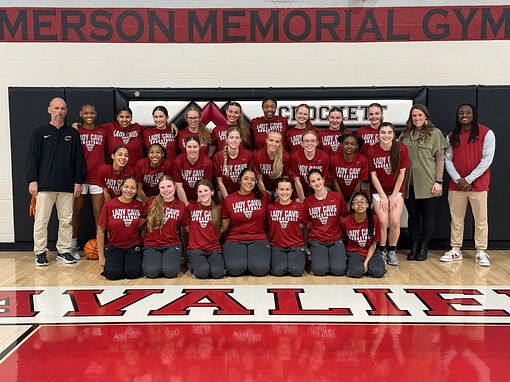
My first memory of Coach Kayla Irvin goes back to a winter night when the air in a high school gym seemed to carry its own weather. She was an eighth grader at Gleason High School then, and I knew her as Kayla Hudson. I was coaching at Bradford High School, nursing the large and fragile ambitions that coaches carry in February, and we met Gleason in the regional tournament. I had what I believed to be a clever game plan to take advantage of this 8th-grade kid Coach Frazier had moved up to varsity. It backfired. The small figure I had circled in red ink proved unshakable, steady as a fence post in a storm, and Gleason sent us home for the summer. I followed the remainder of her prep career, which included a state championship, and later watched her play at Union for Mark Campbell, where they would bring home a few national championships. But this story truly begins when her name changed—not so much to Irvin, but to Coach. It is a special transition when a player becomes a shepherd of players, when the one who once ran suicides now sets the whistle to their own lips. I never coached head-to-head against Coach Kayla, but I have watched her teams compete against many of my former players’ and daughters’ teams. I was always impressed with how hard they played and how well they executed. Later, we played a little travel ball with a young lady from Crockett County, Karlee Castellaw, and I would ask her about playing for Coach Kayla. The kid’s face would light up. You could see it before she said a word—there was something truly special going on over there in Crockett County. As this season started, Crockett was not really on my initial radar, but they picked up some great wins and are extremely competitive every night in one of the toughest 3A districts in the state. I had to find out what makes this program so special. So many other coaches have commented on how much Coach Kayla loves those kids, so I wanted to see for myself. And as we all have experienced, some things are just hard to put into words, but things were different here. As I walked into the practice gym that day, I truly felt right at home. There was energy that is hard to explain, and the sound of sneakers and bouncing balls echoed with a kind of purposeful joy. I sought out one of the best shooters—something I do on most of my visits—for a little shooting contest. Most places, whoever I shoot with, we’re left alone. The other players curiously watch from a distance. Not here. As soon as we started, the entire team gathered around and was fully engaged. They hustled after every rebound, snapping the ball back to Keeton Holyfield (my opponent) and to me as quickly as possible. But it wasn’t just that they had gathered. I noticed kids who had no idea who I was cheering for me, and they were also cheering for Keeton. I think they genuinely wanted both of us to make every shot. The first time I had any cheers for me shooting a basketball in 30 years, I felt special. I had asked Coach Kayla to send me a few kids to interview, but I couldn’t interview them all. So I gathered with six or seven players (I apologize for the six/seven) to ask a few questions. Before I could ask the first, I noticed something else: the entire team was huddled around, listening intently. One of the players in the back said, “We just want to hear what everyone says.” They were not seeking attention; they were sincerely interested in their teammates. In a world that often strains for the spotlight, these girls leaned toward one another instead. As I finished asking questions, my last interaction with the players was a young lady asking me if I would like to join them in prayer before they were dismissed. They took me in as one of their own. I was not just a guest; I was part of the program. I have been welcomed everywhere I have visited this year, but this was different. I felt included. After the team was dismissed, I sat down with Coach Kayla and Coach Tyler Gadlen in the office. We talked for close to an hour, and I could have stayed all day. I had coached against Tyler years ago when he was a player, and he once hit a half-court shot to beat me. We also had a common mentor in Tim Allen. I was not a total stranger in this office, but as I sat there talking, I felt as if I had been on the coaching staff for the last five years—completely at home. Coach Gadlen told me, “I started coaching football, Kyla kinda stole me. It's been a great transition for me, just because I feel included in what we do here. She does a really good job of getting the girls to understand how to love each other. And that's the most important thing. Coach Allen did the same for us when I played, and it's the same here with the family environment. It's very easy to come to work here every day. I look forward to it, I just love coaching these girls.” It’s not just the coaches who recognize this quality; the players see it too. Halle Holyfield told me, “I just feel like we're a family and choose each other everyday, we may not be the most talented group in the area, but I feel like were are going to show up and work hard, and we know we are going to play for each other. And that's all that matters, we’ve built a culture where we show up for each other, and you just play hard, and you never know what can happen when you show up for each other.” Two themes surfaced again and again: hard work and showing up for each other. This kind of culture comes from Coach Kayla, though she deflects praise. However, she will be the first to tell you she learned from two of the best who ever did it in West Tennessee. “I truly feel like I have played for two of the best coaches in the world, I mean that, nationwide I would put them up against anybody, and for different reasons, and so many the same.” She continued, “Coach Frazier taught me the value of toughness; my circumstances don't dictate my approach. I have a choice to make every single day; he never allowed us to make an excuse. When I first got to college, Coach Campbell made a comment, picking at me for being slow, and I was like, "I'm sorry!" I told my parents, “Did ya’ll know I was slow?” I didn't know I was slow; there were no excuses ever, so that was the first time I had heard I was slow. Coach Frazier was just get it done, figure it out, and I absolutely loved that. Toughness sticks out, and in a world where toughness is not always viewed in a positive light, I’m glad he instilled that in us, and playing for him was just special to me.” On Coach Campbell, she said, “Coach Campbell was the most relational coach, unbelievable! He cared so much about our lives, he would call you in just to see how the transition from high school to college was going, that's just who he was, he cared about what was going on in our lives.” Kayla added, “He called me out and asked if I was living the life I claimed I wanted. He asked the tough questions. That's who he was. I still have a relationship with him; he taught me so much about the game, a brilliant basketball mind, but when I think of him, nothing basketball stands out. That's what I want. I hope when these girls leave here, they don't think about basketball. I want them to think about family, that's what's important. He taught us to honor God in our efforts and in how we go about things. He was a big process guy, and I have taken that with me. The “Process” is where the Honey is, that is, where God is most glorified.” You don’t have to search hard. If you spend any time around the Lady Cavs program, the love Coach Kayla and her staff have for their players is evident. But it’s not all rainbows and butterflies; it’s a tough kind of love. There is accountability and grit embedded in this program. “She (Coach Kayla) holds us accountable, she doesn’t cut us short on anything we do, it's always for a bigger cause and not just basketball,” said junior Ellie Henderson. Wesley Thornton added, “Practice goes good if we all put our effort into it. If not, sometimes we have rough days, and we have learned to get through those together.” Sophomore Callie Freemon said, “We push each other every day, and if someone is struggling, we pick them up.” Sydney Smith echoed that sentiment: “We always show up for each other even when we're not feeling our best, you can come in the gym having like the worst day, and you see the family and everybody is just so supportive, it makes everything better.” Continuing, senior Keeton Holyfield said, “None of us are selfish; we all want each other to succeed together, we really play for each other.” And again Halle Holyfield: “Every day, even on hard days, we choose each other. When we have a tough practice, we push through for each other, we know we're a family, and we're going to encourage each other cause we are in it together.” This is what every coach wants: a team that pushes each other, a team that works, but most of all, a team you can coach hard. How has Coach Kayla developed a program where she can demand so much? They are always going to play hard, compete on the glass, defend, and the coaches are not going to cut them any slack. How does it happen year in and year out—these teams that overachieve and care so deeply for one another? As any good builder knows, it starts with the foundation. And when you have the foundation of family, you can build things that last. Coach Kayla said, “It's a disservice if you don't start with the family part, it's the most important thing. State championships don't fulfill anything; they're wonderful, I have been blessed to be a part of it, and it's great, but life goes on. These kids have a life after ball, and we are failing them if were not teaching them how to be wives and moms and friends, that is the foundation, it is the starting point, and allows the basketball things to go well.” She continued about her staff, “Coach Gadlen and Fronabarger play a huge role. It's been important to me to have a male on the staff; it's been a real compliment, and to have two guys that can be like father figures, it's just huge to have a whole staff of people invested in the kids.” This family environment paves the way for kids to be coached hard. Life is hard, but it's easier with family. Coach Kayla talked about this year's team, “I have never enjoyed coaching a group more than this one. They are so coachable, we don't want it easy; nothing worthwhile comes easy, but we do want it easy when it comes to choosing each other and loving each other. There's not a selfish bone in their body. These kids play hard, have no quit in them, they may not shoot it well, we may get outplayed, but there going to rebound and there going to be tough, and when you have that it takes pressure of results, were going to put ourselves in position to be in some ball games and in the end thats all you can ask for, They have seen with some wins early in the year if you can just gut it out and hang around anything can happen, they were able to see that. What's great about this team is its somebody different every night.” This foundation, it goes even deeper; it is set upon a rock, and I believe that is why things truly feel different here. As Kayla, Coach Gadlen, and myself sat, and talked about life and hoops, we had a long conversation about the many pitfalls of chasing wins. It was during this conversation that she said something that revealed the bedrock beneath it all: “This is not eternal, these kids have a whole life, for many of them basketball is just something that they do, and that's how it should be. Cause we don't want their identity to be in ball, we are failing them if we let them think ball can fulfill something in them that only Jesus can. But we love to win, we do. But I’m reminded not to be results-focused because it's miserable and it drains you, but focus on the process, doing things the right way, competing, being the best you can be, and we call it on our team, leaving the results to Jesus. Literally, whatever happens, however the cards may fall, were good. If we have prepared in a way that honors God, competed in a way that honors God, and chose each other in the process, in turn, you're going to win some games, and lose some, and that's life, and we all have to learn to better deal with those things. Because the goal is to prepare them for something much bigger than this, not to win as many games as we can in one calendar year.” As I left Crockett County that day, I couldn’t help but hope that someday my youngest daughter will have teammates like these young ladies. How I wish she could play for coaches like Coach Kayla, Coach Gadlen, and Coach Fronabarger. How I pray she could have folks love her enough to be tough on her and hold her accountable. I wish she could play on a team with a Ruth Gourley who told me, “We base our game on the Lord, we all have a relationship with Jesus, and we base our game on honoring God.” That is the highest compliment I can give any program: I truly wish my own kids could be a part of it. I don’t know what the district and region tournaments hold for the Lady Cavaliers; they have a tough row to hoe against some very good teams. But I know they will compete. I know they will show up for each other. And I know that whatever storms they may face, they will stand tall together—because the foundation beneath them is not built on banners or box scores, but on something steadier, something that does not sway when the wind rises. —Eric Hampton
Frank Hughes'
Devin Dicus
Small Town, Big Game
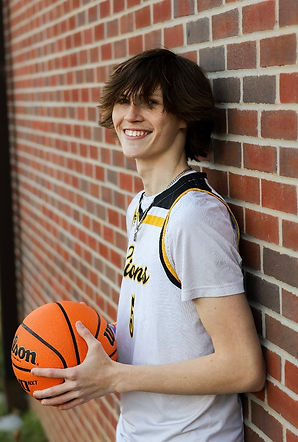
They tell you basketball is just a game, five men and a bouncing ball, but anyone who has ever lived in a small town knows better. In places where the graduating class is under 50 students—basketball is not merely played, it is lived. It is stitched into winter nights and Friday rituals, into conversations at the post office and prayers spoken just a little louder in church pews. I know this, because I lived it. I coached it. And along the way, I learned that the smaller the town, the larger the game seems to grow. During my coaching career, I made several stops before returning home, and of those towns, only one had a McDonald’s. One of those stops was Frank Hughes School in Clifton, Tennessee. And it is there, tucked between river bends and quiet roads, that our Feature story unfolds. There are many blessings in playing basketball in a small community but there are also many obstacles along the path. Frank Hughes Devin Dicus is a young man who has had the opportunity to experience both, and he would be the first to tell you the blessings outway the obstacles. Devin was raised in the rhythm of the game. His older brother, Aiden, a standout in his own right, helped shape him early. “When my brother started playing in middle school, we played outside at home all the time,” Devin said. “We were tough on each other.” Those backyard battles hardened him. He also played in the Clifton Fall League as a kid. “We had fall ball, and you’d get to play in the gym and scrimmage each other.” Basketball runs deep in the Dicus family. Devin’s dad, Brandon, played at Frank Hughes for Coach Robert Culp, and he saw the future in his sons early on. Ashley, Devin’s mom, shared this story: “When the boys were little, Brandon would tell Coach Culp, ‘These guys are going to take us to the state tournament one day.’ Coach Culp would laugh and say, ‘I’ll have to see it to believe it, Dicus!’ Coach Culp recently passed away, but he was able to attend the state semifinal game in 2024.” Coach Culp has since passed, but fate—kind for once—allowed him to witness the prophecy fulfilled. He was there for the 2024 state semifinal, watching the dream he once joked about awake into reality. That side story was special to me. Coach Culp was good to me when I passed through Frank Hughes—good in the way that lasts. He told Fly Williams stories, stayed perpetually in motion, and believed deeply in work. As I’ve aged and attempted to stay in shape, one line of his still follows me around: “A bad workout is always better than no workout.” Knowing he saw that state tournament run feels like something that fate got right. Devin has benefited from excellent coaching throughout his career. His middle school coach was Adam Vaughan. “Coach Vaughan was a great coach,” Devin said, simple and sincere, “We spent so much time on fundamentals, and he taught us how to play the game.” In high school, Chad Love took the reins and kept tightening the wheel. “Coach Love pushes us,” Devin said. “He knows how to pull the most out of us.” That, in basketball, is the rarest gift of all. Yes, Devin played AAU. Yes, he put in the miles. Yes, he does all the things great players do. But, perhaps the biggest factor in his development is small-town charm. “We have a school key,” Devin said. Words spoken by every small town legend across this great nation, I have a gym key! “I go to the gym everyday working on basketball. I do a little bit of everything, but spend a lot of time on the dish.” From a statistical standpoint, Devin’s career has been remarkable. Sidelined by injury as a freshman, he has accomplished all of this in fewer than three full seasons: over 1,300 career points, more than 275 rebounds, 120 assists, and 100 steals. He has earned multiple All-District and All-Region honors and is on the BCAT Watch List. This season, he leads our entire coverage area in scoring at over 25 points per game. These are not quiet numbers—and they are made louder by the fact that every opponent knows exactly who he is and designs its defense accordingly. Coach Love had this to say: “Devin is the most talented player I’ve ever coached. His ability to score at all levels is remarkable. Over his time here, he’s won countless games for us down the stretch. During our 2023-24 state tournament run, he made clutch shot after clutch shot as we played to a runner-up finish.” That state tournament run is one of Devin’s favorite memories. “That was the best part of high school, in my opinion. It was such a great experience.” And here is where small-town basketball reveals its true power. You never play alone. In forty years of watching the state tournament—long enough to remember games at Memorial before the Glass House—I’ve learned that Single-A always draws the biggest crowds. Small towns close their doors and open their hearts. When Frank Hughes played in Murfreesboro, Clifton arrived in masse—everyone, save for John Templeton, lol (little joke) “The community was big,” Devin said. “After we won sub-state, they had all the firetrucks, and the entire town would come out to welcome us home.” As Frank Hughes marched toward the 2024 state finals, the rest of Tennessee seemed to march with them. They eventually fell to Chattanooga Prep (who this writer still questions being in 1A, but I digress), but not before capturing something rarer than a trophy: statewide affection. Devin knows the magic well. “The fans make it special. Our student section is really good.” Still, the small-town tax remains. “Sometimes it’s hard to get your name out,” he admitted. Having lived it as both a player and a coach, I know that, as great as the atmosphere is, the drawback is that kids from small towns are often overlooked. Small-town players are often dismissed with lazy phrases—“They don’t play anyone.” It can be frustrating. Devin wants to play at the next level, and someone should be paying attention. Competing in what may be the toughest Single-A district in the state, against Perry County and Wayne County, while seeing box-and-one defenses on a nightly basis, his production borders on the absurd. When you add what he’s done on the biggest stage against teams like Chattanooga Prep, there should be no questions about the caliber of competition he’s faced. Now, as tournament time approaches, Frank Hughes finds itself in familiar territory: the underdog’s lane. Devin embraces it. “Our district is probably one of the toughest in the state,” Devin said, “but as we go forward into tournaments, we’ll have a chance to upset some teams.” Regardless of how it all plays out, Devin Dicus is going to be a successful young man. There is more to him than basketball. He ranks seventh in his class, serves his church and community, and carries himself with the quiet confidence that comes from being raised right. With a strong family and a town that stands shoulder to shoulder behind him, his future extends well beyond the hardwood. From one small-town player and coach to another, I’ll be watching—and rooting—and hopeful that someone at the next level will give him the opportunity he’s earned. —Eric Hampton
DYERSBURG'S
CHELBY JORDAN
WHAT GREATNESS LOOKS LIKE
Chelby Jordan: What Greatness Looks Like Chelby Jordan is one of the top basketball players in the great state of Tennessee. By the numbers alone, she is putting together yet another outstanding season. Her team sits at 16–4, and she averages 16.3 points, 7.5 rebounds, 4.2 assists, and 3.5 steals. Prep Girls Hoops TN has her ranked as the 4th-best player in the state, while ASGR Hoops lists her as the 120th-ranked player nationally. Her career numbers at Dyersburg are staggering as well: 1,561 points, 690 rebounds, 393 assists, and 357 steals—with plenty of basketball still left to play. Those numbers have translated into a shelf full of hardware. Chelby has earned two All-District selections, Region 7AAA Tournament MVP honors in both ’24 and ’25, BCAT All-State honors in ’24 and ’25, a BCAT Player of the Year finalist nod in ’25, TSWA All-State ’25 recognition, two Whitfield Thanksgiving Tournament Player of the Game awards, Jackson Sun All-West Tennessee Team ’25 honors, All-State Tournament Team selections in ’24 and ’25, and was a member of the 2023–2024 State Championship team. All of that work has not gone unnoticed. Chelby has already signed to play Division I basketball at Belmont University in Nashville, Tennessee. But before the move to Music City, there is still work to be done here in the West Ten. Her start in basketball can be traced directly back to family. Both of her parents, Brian and Chelle Jordan, worked in the Trenton School District when she was young. When asked about her beginnings, Chelby said, “My Trenton days, we were at the school a lot. Dad would be there for baseball or softball, and my Mom was the cheer coach for basketball, and I was always at the gym. So I would pick up a ball, and I started there.” Chelby has three siblings—an older sister, an older brother, and a younger sister—all of whom are active in sports. Her dad, Brian, told me, “Her older brother played basketball, and spending time shooting on his goal was a big influence on Chelby’s love for the game.” Another early influence was Coach Drew Gibson. He noticed Chelby hanging around the gym and approached her dad when she was in the fourth grade. Brian recalls, “He was like, ‘Hey Brian, can y’all just let her come and practice with the middle school?’ So we let her. Then he asked us to bring her to the game and said he’d let her sit on the bench. Then he puts her in the game. He took some heat for that, but his allowing her to do that—to get the experience of playing against older kids—it really helped her and lit a fire in her for basketball.” I first saw Chelby play when she was in the fifth grade, when Pride West had just started an AAU program. My daughter was playing in the same organization for Willie Trevathan, and Chelby was playing for Ashley Ayers. Because they were in the same program, they had a few joint practices and scrimmages. I’d love to brag about how the first time I saw Chelby, I knew exactly how great she was going to be. I’d also like to think I have a good eye for talent in a gym. But this didn’t take a basketball savant or a good eye; it was glaringly obvious to anyone. Even in the fifth grade, Chelby already possessed the three things you look for in a player: elite athleticism, exceptional skill, and a natural instinct for the ball. So yes, I called it all those years ago—along with everyone else who saw her. This kid was going to be a special player. Chelby’s path, though, has not been without bumps. A few years after those early Pride West days, we were scheduled to play Dyersburg Middle School. I was excited to watch that kid again, but Chelby was sidelined for nearly two full seasons after knee surgeries. Her dad explained, “She had to have both kneecaps reset. It’s called Patella Alta, a condition where the kneecap sits too high on the femur, causing decreased stability and knee dislocation. All of her dislocations occurred during non-contact moves, and seeing them was hard. It’s tough for a father watching your child hurt. Her doctor told her, ‘This may sound crazy, but you’re lucky this happened at a young age. A lot of times it happens to kids when they’re 16 or 17.’ So to find this early and get it fixed was a blessing. The surgery has a high success rate, and Chelby has been 100% since recovery.” And recover she has. Her four years of high school basketball have been nothing short of phenomenal. Spending the last three seasons in the backcourt with Cincinnati signee Joya Crawford made Dyersburg one of the most recognized girls' teams in the state. With Joya now in college, Chelby has taken on an even bigger role this season. “It’s been tough—it’s a mental game. I’ve worked hard for this, so I have to go out with the mindset that no one can stop me, but at the same time keep all my teammates involved.” Opposing teams have taken notice, often throwing junk defenses her way. “The first few games, when I saw junk defense, I was a little passive,” she said, “but I’ve learned to attack it a little more. You get in the games, and you just have to figure it out.” I think it's safe to say she has figured it out. Watching her highlights, I’m not reminded of her former teammate Joya Crawford as much as I feel like I’m watching a female version of Jamal Crawford: quick behind-the-back changes of direction, stopping on a dime, between-the-legs into a crossover, deep range on her jumper, the ball seemingly on a string, and smooth finishes at the rim. Without question, she is one of the most electric players I’ve seen. That kind of excellence - being one of the top players in the nation - doesn’t happen by accident. It takes work—real work. When I asked Chelby about her routine, she said, “I’m usually up at 5:30 every morning and off to Dyersburg to get on the Gun before practice. I try to have at least 120 makes before practice starts, then we go right into practice at 7:30. We come back right after school and practice again. Most days I’ll come to Jackson and get a workout in with Coach Ashley, Haylen, and Christian… As long as I’m available to get in with them, I work out with them at least two times a week and sometimes more.” Stop. Go back and reread that paragraph. We see the crossover and the silky smooth jump shot and label it greatness. We see the stats and accolades and say this is what greatness is. Ahh, but alas, the true picture of greatness is a kid rolling out of bed at 5:30 a.m. every single day. That is what greatness looks like. It’s not just shooting—it’s making 120 shots before a 7:30 practice. That is what greatness looks like. It’s finishing a second practice and still heading out for individual workouts at night. That is sacrifice. That is work ethic. That is the true picture of greatness. Hard work gets rewarded. Next season, Chelby will continue her basketball journey at Belmont University. She spoke about the process: “It was a process. It was heavy but fun at the same time, seeing how different each program was and their different packages.” She continued, “Coach Bart and his staff just really believed in me, and it just felt like the best fit. I was weighing my options, and some of it came down to being a little closer to home. I also prayed a lot on where to go, and faith played a major role in my decision.” Faith and family have always been central in Chelby’s life. “We have a church in Trenton, and my mom is a pastor. Faith was big for me during my rehab time as well,” she said. “It’s great having my parents in my corner. They’ve helped me with so many things and through a lot of things.” When I asked about life after basketball, Chelby didn’t hesitate. “Yes sir—Physical Therapy.” After going through two knee surgeries herself, she added, “I want to go into that role. Dynamix and Star—being with both of them through my surgeries played a part in me wanting to do this.” For young players coming up, Chelby offered up the advice, “Continue to work on your game, take criticism, and be yourself, and that will take you a long way.” Athletics is a great teacher, and after sitting down with Chelby Jordan, it’s clear she has learned those lessons—and not only learned them, but she has the ability to apply them to life. It’s easy to get lost in the talent when you watch her play, but a deeper look reveals something sturdier underneath: faith, family, and hard work. Whatever Chelby Jordan sets out to do, she’s equipped for it and is going to be nothing short of amazing. I can’t wait to see the rest of her story. -Eric Hampton


2025-26
PC Vikings
Chasing Ghost!
There are few places in the world as special to me as Perry County, Tennessee. If there has ever been a true basketball town, this is it. I was blessed to spend four years coaching in this community, and it left a lasting imprint on me—not just as a coach, but as a person. Some call it “tradition,” but I’m telling you, from being there, it’s something bigger. There is a weight that comes with being a part of it. When I would walk into the old Linden Gym, there in the lobby hung a picture of Willie Hudson—the coach of three state championships before classifications—and I would stop cold, frozen, staring. It was a haunting photo, as if Willie himself were looking straight through me, saying, Don’t mess this up. I know Coach Haston, having grown up in Perry County, has felt that same pull. He once sent me pictures of old Clair Bee coaching books—if you know, you know—that had been part of Coach Hudson’s collection. Relics, really, crying out from the past. Dave Rhodes was my first boss, a man who won multiple state titles as head coach in Perry County. When you were hired there, there was an understanding—an expectation. Walk into Perry County’s gym, and you won’t find Region Championship banners or District Championship banners. None of that. What you see are State Championships. That was always the bar. Six state titles. Eight championship game appearances. Trips to the big dance in every decade, all from one of the smallest towns in the state. All the players, all the names, all the stories, the banners, the legends—it’s haunting. It may sound like unfair pressure, too much to put on coaches and kids, but it’s not like that at all. I’ve been there. You feel the weight. You feel the pressure. But it’s a good kind of haunting. In The Sandlot—a top-five movie for me—the ghost of Babe Ruth shows up and gives Benny the same line that opens our Back in ’82 section: “Remember, kid, there are heroes, and there are legends. Heroes get remembered, but legends never die.” Perry County is full of legends. And while we’re on sports movies, it’s a lot like Field of Dreams. If I walk into a Perry County gym alone, I can see Willie Hudson on the sideline. I can see Albert Ellison and the boys in black. I can see them scrimmaging against a Dave Rhodes team featuring Mike Rhodes. I can see Kirk Haston and Cory Brown off to the side, saying, We got next. I see them all. So many names, I dare not try to list them all. And just like staring Willie Hudson’s picture in the eye, even typing this now, the hair on my arms stands up, and a chill runs down my spine. It is a haunting place—Perry County basketball. But do not fret for those haunted by it. Do not worry about the burden or expectation placed on these kids, because these are friendly ghosts. They call each young person in the community to step into the light, to take up the chase, to become legends themselves. I’ve never been anywhere that supports basketball more fully. There is pressure, yes—but there is also unlimited love and support from a community rich in hoops. Those who were come back and pour into those who are. And every time you think the run is over in Perry County, here they come again. This year’s team is chasing ghosts, and with each game, they seem to gain a little ground. Kirk Haston—one of the playing legends of this storied town—is now looking to join the legends of the sideline. After doing his diligence as a player, he’s now chasing coaching legend. Along the way, he’s taken on one of the toughest jobs I know: coaching your own kids. He has two sons on this year’s team—Kooper, a freshman providing minutes off the bench, and Kenner, a junior who is quickly making a name for himself in Tennessee basketball. Expectations are tough enough when you’re a coach’s son. They loom even larger when your dad is a former NBA player—and when his career is one of the very ghosts you’re chasing. Kenner has embraced that challenge. He’s averaging over 18 points and 5 rebounds per game, and lately he’s been shooting better than 50 percent from the field as the Vikings climb the state rankings. Kenner says, “Basketball has taught me that hard work and consistency pay off.” And consistent is exactly what he’s been. This Viking squad is balanced in many ways, including its mix of youth and experience. One of those steady veterans is Colton Pevahouse, a team leader for several seasons now. Colton has been a walking bucket for a while—able to score from all three levels—and he’s averaging 17.8 points per game while shooting close to 40 percent from deep. But he brings more than scoring. He brings toughness, maturity, and a calming presence that keeps the team focused. After a few early bumps, this group has really come together, and Colton’s leadership has been a big part of that. As he put it, “There are going to be rough patches and bumps, but we have to keep pushing to become successful.” Junior Landon Warren has been tasked with holding down the paint. He currently leads the team in both rebounds and blocked shots while providing a steady offensive presence. But Landon’s impact stretches well beyond the court. While a local church awaits a new pastor, Landon has been filling in and preaching the gospel. Staying connected with the Perry County community over the years, it’s a blessing to see role models like him for the younger kids coming up. In Perry County, former players are often found giving back. In Landon’s case, that process has already begun. His outlook is simple and powerful: “Life is a get-to, not a have-to.” That mindset spills into everything he does. Senior Jake Mercer has done a little bit of everything for the Vikings this season—the Swiss Army knife of the team. A hard-driving, athletic player who can also knock down shots from deep, Jake is second on the team in rebounding and brings valuable senior leadership. When asked what Coach Haston says too much in practice, his answer was short and telling: “Block out.” It’s advice he’s clearly taken to heart, hauling in nearly 100 rebounds already this season. Freshman Brody Lee rounds out the starting five, adding youth to the lineup—and carrying a few ghosts of his own. His father, David Lee, was one of my former teammates and a legend in his own right, leading the Lady Vikings to a state tournament appearance in the early 2000s. In Perry County, the ghosts are everywhere. Thrown into the fire, Brody looks ready for it. As he grows more comfortable each game, he’ll play a major role in how far this chase goes in 2026. Unlike his dad—who once talked for hours on one of our podcasts—Brody summed up what basketball has taught him in a single word: “Responsibility.” There is depth on this team as well. Senior Eric Peters, juniors Ryan Marrs and Eric Moore, and freshman Kooper Haston have all contributed when their numbers were called. Many of the players agreed that Wayne County High School is one of the toughest places to play, and as the season unfolds, it’s looking more and more like these two teams may be on a collision course toward the Glass House. Perry County won Round One last Friday night, and it’ll be fun to see if this group can find its way back there again. Winners of seven of their last eight games—with the lone loss coming against West TN Box Score’s No. 1 team, Class 4A Henry County—these Vikings have shown they can compete with anyone. As the 2025–2026 Perry County Vikings chase the ghosts of legends past, they are quietly writing stories of their own—stories that will become another chapter in Perry County lore and inspire the next chapter still waiting to be written. — Eric Hampton
Wayne County's
Ava Ashley
Live, Learn, and Pass It On
After shooting a podcast with Ava’s parents (coaches), we all sat down around my dining room table to talk hoops and life—the kind of conversation that doesn’t need an agenda, only time. I start almost every interview with players with a very similar question: Where or when did you get your start in hoops? To which swift came the reply, “Well, when I came out of the womb, and I’ve been in a gym ever since.” This opening statement was, first and foremost, a great truth—one that any of us who grew up in basketball homes understand instinctively. Second, it completely broke the ice for the rest of our conversation. I am often as nervous as the kids in these moments, but from that point on, the interview process was easy, almost conversational in the best sense of the word. As for the original question, she continued, “I played in all the pee wee leagues and went to all the summer camps as a kid, my dad was the middle school coach, so I was always around his teams and playing pick up ball. But I really started to dedicate myself to basketball in the 7th grade, I gave up softball and figured out I have to get in the gym to get better.” Get in the gym she has, and her development has been unmistakable. Outside of her time with the middle school team, she was also very involved in AAU and travel basketball. She started with the Southern Stars and then played for Tennessee Flight. This year she will be playing with SGB, and Ava said, “I am really excited, the team will have a lot of the girls I first started out with on the Southern Stars. We had all gone different directions and now were back together again.” Ava seems to have truly enjoyed the travel. “I love traveling, if it were up to me, we would do it all the time. I love seeing new places and eating with dad.” Dad has seen a lot of growing and maturing through all the experience on the road. “Just the growth that she's made, Ava’s always been hard on herself, but she's really grown up and matured the last two years, and to see that, the mental side really click as far as I've missed a few shots but its o.k., when she was younger she would really get down, but now she is like, I can keep playing. I have loved seeing her start to believe in herself more.” But it’s not just games that have fueled her improvement; like any great player, she puts in the time at the gym. And like many great players, she’s not in the gym alone—it’s a family activity. “Normally, I get my brother, and we go to the gym, and get on opposite ends, or we will start arguing, we get on the dish and do our routines. I have really enjoyed working out on the dish; we just got a new one, and I love it.” When asked if they ever play one-on-one, Ava said, “We have always been competitive and he claims he beat me one time at one-on-one and says that's why I won't play him anymore, but he is getting stronger now.” I first saw Ava play in a preseason league at Hardin County for high school kids. She was an 8th grader at the time, and you could see the potential. She already had great size and could really shoot the basketball, but her athleticism had not yet caught up with her height. Fast forward to this year as a junior in high school—a whole lot of basketball played and work put in later—and it appears to be all coming together. Thanks to the power of the internet, I’ve had the opportunity to watch three full games against tough competition. And because of years of watching hoops, I can’t help but make player comparisons. Her game reminds me of Rasheed Wallace—except she has no attitude with refs, lol. She is extremely long and a great rim protector. I really don’t know how many shots she blocked in those three games, but it was a lot. She is an excellent rebounder, and once she has the ball, she can advance it off the bounce or deliver a great outlet pass. On the offensive end, she does a little bit of everything: scores effectively in the post, shoots a high percentage from the free-throw line, and is an outstanding three-point shooter in a 6’1” frame (looking like Sheed). Two things really stood out to me—the range on her three-point shot, which comes with ease from well behind the line, and her passing ability. The offense truly runs through her, whether on the perimeter or in the paint. I was not expecting the level of court awareness I saw on film. It may have surprised me, but her coaches were well aware. “Ava the player has always had a high basketball IQ, she knows where everybody is supposed to be, what everybody is supposed to do, sometimes to a fault.” Coach Molly continued, “Ava has always been competitive, but she has really developed a great motor and work ethic. She is just really starting to understand her role better. She is becoming a great encourager and leader. She was fortunate to play with great leaders early in her career, and now she is doing the same.” Ava spoke fondly of those who came before her. When I asked which teammates influenced her most, she said, “Probably Blair (Blair Baugus, who now plays at MTSU) the most. I just played with her more, and she was always encouraging and never got too far into her emotions. She was able to tell you what you needed to do with a good attitude and in a good tone, and how to fix it. It really helped me grow as a player. Our other senior, Emma (Emma Bryant), was always the hype person and could always find a way to make you smile.” Coach Molly added, “Ava understands that this is her role now and she’s doing a really good job of stepping into that.” Throughout our conversation, Ava displayed a maturity—or perhaps perspective is the better word—that seemed wise beyond her years. When asked about life in general, she said, “My faith is my top priority for sure. Sometimes I get so focused on the basketball aspect, I have to put that down for a minute and remember why I’m there doing it, and who I’m doing it for. Plus, I have good leaders (nodding toward her mom and dad), and I get to see them live out their faith each day.” She also spoke about her current team. “This is the closest team I have played on, we are all really close. We do a team thing every Friday morning that is open to everyone, where we do a bible study and different players lead it.” Ava’s dad told me, “One our the things we teach is to be your teammates' biggest fan, and if you can do that, you've got most of it whipped.” And this seems to be a team that has fully embraced that philosophy. When high school ends, Ava hopes to continue her basketball career, and she has already received several offers. Looking further ahead, she hopes to do something in sports management or medicine. “I want to be around it but not in it.” I asked about coaching. “Definitely not coaching!” she replied. Whatever she chooses, I have total confidence she will be great at it. Still, this old coach hopes she’ll reconsider one day. As she listened intently during the podcast, and as I watched her interact with her parents and me around the dinner table, it was clear she has already learned one of life’s great lessons: Live, learn, and pass it on. Just as she learned how to be a teammate from those before her and now passes that along to those coming up, she has also witnessed a strong faith in Jesus at home and now models that for others. A lifetime in hoops—from the womb on. Like I said, she’ll be great at whatever she does. But maybe, just maybe, we hoop fans will get lucky, and Ava will change her mind, and there will be another Coach Ashley one day. -Eric Hampton


Scotts Hill's
Jojo Howard
"THE NATURAL"
I can still remember the first time I heard the name Jojo Howard. It was before a middle school boys' basketball game at Scotts Hill, and Coach Burton was preparing his team to face Pin Oak. I asked him a few questions, and he casually said, “We just have to keep Jojo under control, and we’ll be fine.” At the time, I had no idea who Jojo was. After my daughter’s game that night, I decided to stick around and watch a little of the boys' game. As the teams warmed up, I asked, “Which one is Jojo?” They pointed to a little, skinny kid, whose shoes looked four sizes too big for him. I thought to myself, No way, this is the kid Coach Burton is worried about. Turns out, it was. That little fellow could shoot the lights out — bombs away, as they say. Fast-forward to today, and that same young man has filled out those shoes that once looked way too big, growing into one of the top basketball players in the West Ten. Coming off a strong junior year, Jojo has faced every kind of defense you can throw at a kid — and that’s the ultimate sign of respect from opposing coaches. Despite the constant pressure, he’s still managed to be a top-ten scorer in the West Ten, averaging over 20 points per game. But Jojo is more than just a basketball player; he’s one of the better three-sport athletes Scotts Hill has ever seen. I've had a front-row seat watching him grow and mature, and it’s not hyperbole for me to say the kid is a natural. His brother, Silas, has been a part of our family for years, dating my daughter since they were both freshmen. Silas also serves as our play-by-play announcer at the games. Jojo credits his older brother Silas for much of his success. “My brother is the one who taught me how to play baseball,” Jojo recalls, “Every day after school, we’d go out and throw the ball around.” He laughs, remembering a particularly memorable day: “Dad came home with a brand-new glove for Silas, and I was mad because I didn’t get one. I was only four, but Dad finally went back to the store and got me one too.” That’s the way it went — following his older brother and playing baseball for as long as Jojo can remember. The countless hours they spent at the park, taking batting practice and throwing, became the foundation of his baseball career. Those early days paid off. Jojo’s had a tremendous baseball career already, starting with his youth-league career in Lexington that culminated in back-to-back Senior League State Championships. In the first of those title games, Jojo pitched a complete game. That performance led to the opportunity to represent the state in the Southeast U.S. Regional Championships, where they won several games and even beat the eventual champions in one match. He’s parlayed those experiences into great success at the high school level. Jojo reflects on his favorite high school baseball moment. “I didn’t play much as a sophomore at the start. We had a really good team. As the season went on, though, injuries and other things happened, I started getting to pitch some. By the end of the year, I was pitching a lot. We were in the winner’s bracket of the district tournament, and I thought we had it all wrapped up. But Riverside beat us and forced an extra game. We were low on pitchers, and Coach said, ‘Jojo, you’re on the bump.’ I ended up throwing a complete game in the district championship.” Head baseball Coach Drake Thompson shared, “What I love about Jojo is his fierce competitiveness. He has such a drive for competing that just simply can’t be taught. He has the type of energy that teammates and fans can get behind. I’ve seen it since I took the head coaching position in baseball - he was a freshman my first year. He's never been the biggest or most overpowering, but just finds a way to win. I have thoroughly enjoyed seeing him develop as both his coach in baseball and a fan in basketball.” This competitive drive stems from Jojo’s relationship with his brother. He told me that when they were growing up, their mom worked as a teacher at Pin Oak, so they had access to the gym. “Dad would take us to the Pin Oak gym, and it would always end in a fight. We were so close in age that everything was always competitive. Dad would break us up, saying, ‘We’re not coming back again,’ but we’d be right back the next day, fighting again. I could never beat him growing up,” Jojo smiles and adds, “He won’t play me now.” I got to see the brotherly competitiveness firsthand. Both brothers took up golf around the same time as my daughter, and we would play in some scrambles against the boys. Their rivalry, as only brothers can have, was unmistakable. It was also there that I saw more of that “Natural” ability Jojo possesses. Jojo had never touched a golf club until his freshman year of high school. Golf, a notoriously tough sport, came easily to him. This year, he tied for the district championship, shooting a 73, and eventually lost to a birdie in a playoff. But despite all his success in baseball and on the golf course, Jojo told me, “Basketball is my favorite.” Jojo got his first taste of hoops in the 3rd grade when, once again, he was following his brother. “Silas made the team as a 4th grader, and I didn’t want to sit in Mom’s room while they practiced, so I asked Coach Smith if I could sit in the gym and watch. He was like, ‘Sure, come on.’ The day the jerseys came in, there was one extra small with no number, and Coach Smith said, ‘I don’t know who this is for’, and he let me have it. We got corporate images to put a #1 on it, and he let me sit on the bench the rest of the year. I actually scored in one game as a third grader.” The rest, as they say, is history. Jojo had a standout middle school career, and after two years of JV in high school, he had grown into those shoes and had a tremendous Junior season. Coach McClain praises Jojo’s work ethic: “His work ethic is as good as anyone I’ve coached. He brings his lunch pail and goes at it every day. Very coachable, and he brings energy to every practice. He’s the kind of kid every coach wants on his team.” Jojo’s path to success has been anything but conventional. No AAU teams, no personal trainers, no crazy routines. When I asked Jojo how he manages to balance multiple sports and be so successful in all of them, he said, “Whatever season I’m in, I’m all in. When golf starts, I’m in golf mode. When basketball starts, I’m in basketball mode. When baseball starts, I’m in baseball mode. Whichever season I’m in gets 100% of my focus.” Jojo adds, “I think I’m pretty quick at adapting. The day golf ended, I switched my mindset right to basketball.” Despite his success, Jojo remains humble and deeply grateful to the people who have helped him along the way. Throughout our conversation, he spoke highly of his coaches in each sport, and you could see the love and appreciation he has for his brother. He also mentioned the countless sacrifices his parents have made: “All the travel, all those hours in gyms and ball fields, the equipment — they’ve supported us in everything we’ve done over the years.” Family and sports have created a solid foundation, and Jojo has big plans for his future. He hopes to attend college, further his education, and start a career. But our conversation didn’t end there. To borrow a line from Paul Harvey, “Now, for the rest of the story.” As a young child, Jojo was diagnosed with a very rare eye disease called Coats’ disease. In his own words, he shared, “When I was about six years old, my mom had an urge, a feeling she couldn’t shake, to take us to the eye doctor, and she didn’t know why. We had never been before, and they were taking pictures as they do, and the doctor saw something in my eye he had never seen before. It so happened that one of his buddies was one of the best eye doctors in the world, so he sent him the picture of my eye. When he saw it, he said, ‘You need to come see me ASAP.’ Within a short time, at age six, I had my first eye surgery.” Jojo continued, “My Vision was declining rapidly in my left eye. I had to go back every two weeks, and I had three surgeries by the time I was 10. And now my vision is improved. If you don’t see God working in that, I don’t know what to tell you. My Mom just had this random feeling to take us to the eye doctor. They said if I waited a week longer, I could have gone blind. That is not a coincidence - that’s God looking out for us. To me, we witnessed a miracle.” Jojo still visits the doctor regularly, but feels incredibly blessed that a doctor whom people come from all over the world to see is located right here in Nashville. Jojo added, “Everything we do, Jesus is right here for us! He’s the center of it all.” As Jojo finishes his high school basketball and baseball careers, I wish him the best of luck. With his strong work ethic and unwavering faith to stand on, I am confident whatever Jojo Howard pursues going forward will look like it comes just as naturally to him as sports have. -Eric Hampton
Union City's Sh'Nyla Moss
"DYNAMITE"
Sh’Nyla Moss - Dynamite Over the last few years, while my daughter was playing, I would occasionally see Union City in what little sports coverage I could find and I would notice the name Moss a lot. When I began covering West Tennessee sports this year, that same name started showing up nightly, attached to eye-popping numbers. I had not seen her play, and I didn’t yet have a face to match the name. So I called Coach Storey to set up an interview, and he graciously invited me to Union City to meet this remarkable young lady. It had been more than thirty years since I’d been on the Union City High School campus, and I had forgotten just how impressive it is. As we walked back to Coach Storey’s office and settled in, Sh’Nyla arrived. At first glance, she was small in stature and very quiet—almost shy. She spoke politely, carried herself gently, and listened more than she talked. Then Coach Storey pulled up some game film. Boom. The quiet young lady sitting across from me in the office transformed into a destructive force on the screen. The contrast was startling. Her game had an electricity to it—sharp, sudden, undeniable. Her numbers this season have been ridiculous: 22 points, 5 rebounds, 4 assists, and more than 3 steals per game. And this isn’t new. Not even halfway through her junior year, she has already surpassed 1,402 career points. But statistics alone don’t explain her impact. Watching her play is an explosion—quick off the bounce, a lethal first step, a confident shooter (she opened the season by making her first 38 free throws), and capable of scoring at all three levels. When she gets into the paint, she becomes just as dangerous as a passer. And maybe most telling of all, she seems happiest at the end of a play when one of her teammates scores. Much like a stick of dynamite, she doesn’t look especially intimidating at first glance—she could almost be mistaken for a soothing candle. But once ignited, the force is unmistakable. When Sh’Nyla Moss steps on the court, all I know is this: I want to be on her team. A game like hers doesn’t come from nowhere. I asked where it all began, and her answer was simple: “Family.” Sh’Nyla grew up with six brothers and an older sister—herself an excellent player. Falling right in the middle, she watched them play and wanted in. “I used to watch them play,” she told me, “and I wanted to play too.” And play she has—from youth leagues to middle school, AAU, and EYBL, where last year she competed with the Alabama Southern Stars. Along the way, she credits her coaches for helping her grow. “All my coaches have been a big influence on me and helped me improve as I came up,” she said. Coach Storey was quick to give praise. “We knew she was special when she came across the street,” he said. “She made a huge impact right away as a freshman, playing with her older sister, who was a senior that season. But really, as soon as she got here, our program made a turn in the right direction.” He added, “She puts in more extra time than anyone else. She’s been a great leader by example.” That extra work shows. Sh’Nyla has logged countless hours on her own, with her family, and with her coaches. “I get on the machine (Dr. Dish) a lot,” she said, “and I do a lot of ball-handling drills.” Coach Storey described their summer shooting program: “Sh’Nyla scored over 20,000 points in our system—hundreds of threes and hundreds of free throws—four to five times a week, on her own.” Given how explosive she is, I asked what goes through her mind when a defender steps in front of her. Without arrogance and with complete confidence, she answered simply: “I just think she can’t guard me.” That confidence, she admits, was sharpened at home. “I beat them a lot at one-on-one,” she said, speaking of her siblings—none of whom were present to dispute it. Judging by her play, I suspect she’s telling the truth. What’s equally evident is her love for her teammates—and her singular focus. When I asked about team goals, her answer came quickly: “Win the state championship.” I asked if there was anything else. She looked at me and repeated, “No. Win the state championship.” Looking ahead, Sh’Nyla said she hopes to continue playing basketball in college. “I don’t know where I want to go yet,” she said. While her options remain open, I know exactly where I’d be visiting if I were a college coach. Beyond basketball, she expressed interest in physical therapy and spoke openly about her faith. “My faith plays a big role in everything I do,” she said. Her favorite verse is Philippians 4:13: I can do all things through Christ who strengthens me. “Because it’s true,” she added. “With Him, I can do anything.” By the end of the visit, we found ourselves in my favorite place—the gym—just shooting hoops. At this point, while kicking my tail in a shooting contest, her personality emerged more fully, kind but COMPETITIVE!!! (she was absolutely going to beat me), quiet but confident, and in this short time, it was clear this young lady is going to be a light in the world—steady and warm, like a candle. But when it’s time to play, she’s pure dynamite. Her game arrives with a boom, and this hoops junkie can’t wait to see what Sh’Nyla Moss accomplishes, both on and off the court.
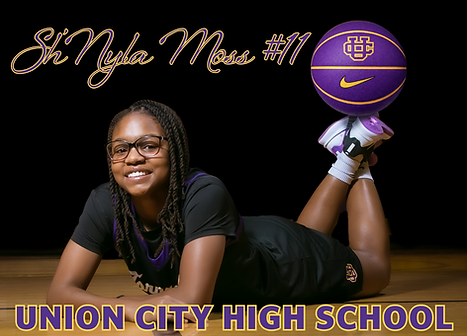

Westover's Rowan Wilson
MORE THAN A BUCKET
Last week, here at the West Tennessee Box Score, we were finally able to do something long overdue: livestream the Henderson County Middle School Basketball Tournament. I was genuinely excited, because like so many others, I simply couldn’t make it out to the games, yet badly wanted to see these kids play. What came through the screen was a parade of talent—teams well-coached, players confident and capable. Still, as often happens in gyms both old and new, one player quietly separated herself from the rest. Westover’s Rowan Wilson was a force on the girls’ side. It was a name I had heard going back to last year, when the Bears won the JV Tournament, but I hadn’t really had the opportunity to watch her play. Last week, I finally did. And here at the Box Score, I’m honored to write the first story on a young lady whose name figures to be spoken around West Tennessee hoops for quite some time—especially considering she’s only a seventh grader. When I turned on the livestream, the very first play I saw was Rowan securing a rebound, taking two strong dribbles—dribbles that somehow created more space than expected—and then firing a three-quarter-court pass that landed softly in a teammate’s hands for a layup at the other end. It was efficient, unforced, and done with absolute ease. I also couldn’t help but notice the number on her jersey: 33. Larry Bird was my favorite player growing up, so comparisons came naturally, if not carefully. Like Bird, Rowan makes basketball feel positionless. She’s big enough to play the four, handles the ball well enough to run the point, shoots it with confidence, plays through contact, and moves with a sneaky quickness that catches defenders a step late. She’s exceptionally strong, shows great touch around the basket, and within seconds of watching her play, her passing ability—rare for someone her age—was unmistakable. But as I watched her two tournament games, it wasn’t Bird she reminded me of most. Only the true basketball aficionados will appreciate this one, but Rowan’s game echoes another Indiana legend: Damon Bailey. She seldom forces anything, letting the game come to her. No matter what the defense throws at her, she accepts it calmly, then finds a way—sometimes subtle, sometimes sudden—to make a play for herself or, more often, for her teammates. That patience, that feel, speaks to a maturity beyond her years. A few days later, I was able to sit down with Rowan, her coach Keith Runyon, and her dad, Roger, to learn more about the player—and person—still in the making. When I asked Rowan where her basketball journey began, she answered simply: “I started with TOT basketball (Mary Elizabeth Moore), where you just do a lot of dribbling, and then I played PTO from Kindergarten till the fourth grade.” Once she joined the school team in fifth grade, she had some built-in competition at home. With two older brothers—Russell, a senior at Lexington, and Redding, a freshman—there were no easy buckets. “Redding taught me most of my moves, playing one-on-one outside,” she said, laughing as she and her dad recalled a particularly questionable foul call from one of those backyard games. “I still shoot outside some, but with my brothers in high school, we don’t get to play as much as we used to.” As her game has evolved, so has her training. Once a week, Rowan travels to work with Joe Wiggins—the same trainer our first feature, Rayanna Fisher, trains with—continuing to add polish to an already advanced skill set. This season also began under a new head coach. Coach Keith Runyon didn’t hide his appreciation. “Huge blessing when I took the job and found out she was on my team,” he said. “One thing I love about Rowan is that she plays so much higher than her age level. I forget she’s 12.” The adjustment to Coach Runyon’s style took a moment. “At first it was very different,” Rowan admitted. “A lot of sprints and really hard. But after about three practices, my teammates and I settled in, and it’s been great.” When Rowan and her dad talked about her mindset going into games, it was refreshingly straightforward: “Go get a bucket.” And she did—often. But what impressed her coach most wasn’t the scoring. “She passes as good as any player I’ve coached,” Runyon said. “Sometimes she passes too much.” That team-first mindset came through in every answer she gave. Almost instinctively, she redirected attention toward “our team” and “my teammates.” Two things were immediately clear: Rowan loves her teammates, and she is not afraid of hard work. That work paid off. Westover won the County Championship, and Rowan soaked it all in. “My favorite thing about the tournament was all the people there,” she said. “Playing in front of bigger crowds was fun, and everyone was so nice.” Coach Runyon continued his praise. “She always makes the right play, craves coaching, and does a little bit of everything for us.” In fact, due to lopsided wins, Rowan often played only about half the game. Coach Runyon shared her per-24-minute statistics with me, and they’re eye-opening: 28 points, 14 rebounds, 12 assists, and 10 steals per 24 minutes. For the stat-minded, that’s a quadruple-double—or, as my dad would say, “a sackful.” One of those “everythings” is her leadership. Watching her play, she is clearly in control—handling the ball while directing traffic, calm amid the motion. “It’s great when you have a player that can act as a coach on the floor,” Runyon said. Rowan explained it this way: “During free-throw situations, Coach Runyon will give me instructions on what we’re going to do. I get the team in a huddle and relay that. I like to explain it and show everybody where to go.” That leadership carries over into practice, too. “She goes hard in every drill, runs every sprint hard, and never takes a play off,” her coach added. Athletic success runs deep in the Wilson family. Rowan’s grandfather, Neil Wilson, was the first major leaguer from Lexington, having a cup of tea with the San Francisco Giants in 1960. Her Grandmother, Nancy Wilson, was Miss Lexington and played Basketball for the Big Red Tigers, and was also the former principal at Westover. Her dad was a three-sport athlete in high school who walked on the University of Tennessee Football team. Her Mother, Heather, ran track and was a basketball star, being a Wendy’s High School Heisman finalist in Mississippi. Her older brothers have played multiple sports, and her younger sister, Rose, a fourth grader, is already following suit on the basketball court. Basketball, however, isn’t Rowan’s only pursuit. She also plays volleyball and softball, cheers, earns straight A’s, and is an active member of the school choir—which, having heard them perform at this year’s in-service, I can personally attest is outstanding. There’s even more beneath the surface. When I asked what she enjoys outside of sports, her answer came easily: “Church, family, and classes.” She shared that she gave her life to Christ on September 21 of this year and was baptized at the start of basketball season. Coach Runyon didn’t hesitate. “That’s what I’m most proud of Rowan for this year—giving her life to Christ, but more importantly, sharing her experience with others.” The name Wilson has been familiar in Henderson County for quite some time. I have a feeling that over the next five years, the name Rowan Wilson will become just as familiar to girls’ basketball fans across West Tennessee. I know I’m looking forward to watching all that this young lady will accomplish—both on the court and well beyond it. -Eric Hampton
Photo by Ethan Wallace
Trinity Christian's
Zack Niven
"PURE"
I had driven over to Trinity Christian Academy for a podcast with the coaching staff. I’d called ahead, asking Coach Williams if it would be possible to interview “the Niven kid.” I had noticed that Zack was having a strong start to his senior year, and being a coach’s son myself, I figured it would make for a good conversation. When I arrived on campus, I was chatting with Coach Williams, asking about Zack, and during that brief conversation, something he said caught my ear. “In all my years of coaching basketball, he’s the best shooter I’ve ever coached. I’d put him up against anybody.” Now, if you’ve listened to the podcast, you know I fancy myself a shooter. So, that comment stuck with me. I know the players Coach Williams has coached. I had to wander, was he being serious? When Zack walked into the gym, my first thought was, “He looks the part.” Standing 6’8”, with a long, lean frame, he was exactly what you’d expect of a rising star. But my mind was still grappling with Coach Williams' bold claim as we sat down for the interview. After a firm handshake, we got started. Zack’s father, David Niven, is currently in his 27th season at Union University, and his 16th as head coach. I had to ask Zack: What’s it like growing up as a coach’s son? Zack smiled. “Really cool,” he said. “I have always been around the game, at the practices, and got to see dad’s teams up close. I got a first-hand look at what it’s like to play for him, and it was great to travel all over the Southeast with his team. He has been able to give me a lot of excellent advice because of his knowledge of the game.” My own memories kicked in, and I asked Zack if he ever sat on the bench with the team. He smiled again, shaking his head. “That was more my brother. He was always on the bench. He was more the coach, and I was always running around playing.” Coach Williams, who played for Zack’s dad, has watched Zack grow up and offers the highest praise. “As a person, you don’t get many better than Zack,” he says. “And it’s not just about basketball. He’s going to be successful at whatever he does. He’s got a great family behind him, a fantastic work ethic. Just an all-around great kid.” The admiration between player and coach was mutual. Zack told me that while he was homeschooled through middle school, he played for Northeast Middle School. When it came time to pick a high school, the choice was easy. “Coach Williams had played for my dad,” Zack explained. “We already had a relationship with him. I knew that playing for him would be a great opportunity because I knew I was going to be coached hard.” That struck me—here was a kid, coming to high school, seeking out a coach who would push him. Who would coach him hard! That is a sign of a kid who has grown up in a gym, to seek out that kind of environment to maximize his growth. And push him, Coach Williams has. “He’s improved tremendously,” the coach said, giving Zack a quick once-over. “Look at his frame—6’8”, long. He has become a great shot blocker for us.” In a game earlier this season, Zack set the record for blocked shots in a career at TCA. Then Coach Williams said it again. “And he’s the best shooter I’ve ever coached. I’d put him up against anybody.” That quote. The one I couldn’t shake. Now, I may be almost 50, but I still have a lot of teenage boy left in me. So, I just had to find out, I had to know, could this kid be a better shooter than me? I challenged Zack to a free-throw shooting contest. I figured that was a safe bet for me. On a bad day, I can make 27-30. That should hold, right? Zack, in his long, slender way, ambled out to the court, still wearing a pair of slides. No warm-up, just a casual stride. He drained 30 straight shots. 30 for 30. And I’m telling you, I don’t think a single one of them even touched the rim. I won’t even discuss my turn. Let’s just say, I was shell-shocked. Coach Williams wasn’t lying. Zack Niven’s shot is PURE!!. Like Sweet Church Music. For all of this young man’s ability (and he has a lot), he is a pure shooter and TCA’s all-time leader in blocked shots; his focus is solely on the team. He deflected every question back to the team. He had no concern for his points or blocks. “It’s not about me,” he said. “It’s about the team. I just want us to win. I’ll do whatever I can to help us do that.” Zack plans to see how far he can go in the game of basketball, although he’s not sure what he wants to do (except for golfing with his dad and brother), he does seem acutely aware that the ball will stop bouncing one day. As the conversation deepened, he spoke of other things outside of hoops, things that make me confident he will be fine when that ball does stop bouncing. “My faith is important to me, my identity is not found in basketball, it's found in Jesus Christ.” Zack continued, “If I play great or play bad, it's not the end of the world, my faith helps me stay even keel. Basketball is not the end-all be-all; there are more important things, and I just want to be a good representation of Christ when I play and hopefully can point others to him.” As I left TCA that day, I was humbled—both as a shooter and as a person—from my brief visit with this remarkable young man. If my instincts are correct, and our instincts usually are, this young man has a heart as PURE as his jump shot, and the world is going to be a better place wherever he ends up in this walk of life. -Eric Hampton
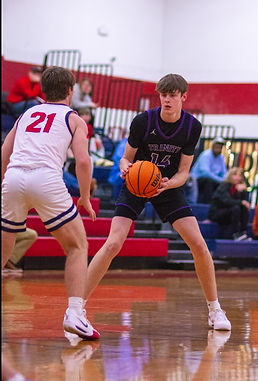
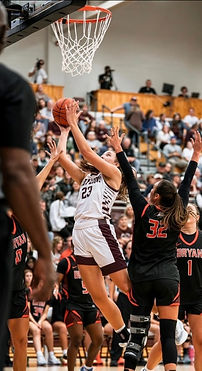
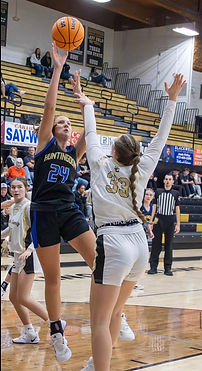
Lilly and Wylie Kee
3 KEE'S TO SUCCESS
Lilly and Wylie Kee are no strangers to success on the basketball court, and both seem to possess the quiet, accumulating tools that promise a life of achievement long after the last horn sounds. After sitting down with the sisters, it becomes clear—almost gently obvious—where it all comes from. Though they are known now as basketball players, their foundation is built on strong family bonds, a work ethic stitched into them from childhood, and a faith that seems to steady them the way a lighthouse steadies a shoreline. Lilly starred at Huntingdon High School from 2020 to 2024, guiding the Filly's to a state tournament appearance her senior year. But she wasn’t always the force she became. “Not interested at all—I actually wanted to cheer,” Lilly said, smiling at the memory. Her uncle, then the boys’ coach at the high school, persuaded her to try basketball for just one year. That was all it took. “I loved it, but through my freshman year, I was not very good. Then, in my sophomore year, a girl quit, and Coach Wilkins told me I was going to have to step up. He pushed me and really helped me get going in the right direction. When I got to work, I figured out I could be pretty good, and that sparked a passion for the game.” Coach Wilkins remembers the transformation clearly. “After her sophomore year, she just took off as a worker—stayed in the gym and really developed as a post player.” It was in the post that Lilly thrived. By her senior season, she was one of the best post players in the state. She signed with Freed-Hardeman after high school. “I really liked that Freed was smaller, in a town that was community-centered. It reminded me of Huntingdon, and I loved that it was faith-centered.” College ball, though, carried its own rites of passage. “I wasn’t aware of the jump. Everybody there can play. I didn't have the freshman year I thought I would have, but it helped me grow a lot—made me work harder. You learn you’re not working for yourself but for your team.” That hard work has paid off. This season, Lilly has become a presence in the paint for the Lady Lions, averaging over 14 points and 7 rebounds a game as Freed-Hardeman opened 10–0 and climbed to No. 7 in the nation. Wylie Kee is just beginning to write her own story. With Lilly five years older, Wylie picked up the game earlier. “Coach Jacob started a program here in Huntingdon and put together a travel team where we played local tournaments. We’ve all been playing together since second grade.” Both Lilly and Coach Wilkins describe Wylie as “extremely competitive.” He added, affectionately, “Wiley is a great kid, but she has a whole lot of fight to her.” Wylie said watching Lilly influenced her, but she draws her own boundaries: “I want to go on to play in college too, but I want to do it my own way.” And where Lilly is a pure post player, Wylie is nearly positionless. “She can score from all three levels, has great touch like her sister, but she can take a rebound and lead the break—kinda like Magic Johnson,” Coach Wilkins said, offering high praise for an up-and-coming freshman. Even with a young Huntingdon team, Wylie didn’t hesitate when asked about their goal: “To go to the state tournament.” A moment later, she refined it: “Win the state tournament. I know it’s a tough task, but that’s the goal.” Both sisters possess a remarkable work ethic. Neither has been deeply involved in AAU, but both have put in the hours—quiet, repetitive, patient hours. Lilly is methodical. My daughter Julie, one of her teammates at Freed, said, “Lilly is always in the gym. And she’s not just in there shooting—she always has a plan and is always working.” “I have a checklist in my notes app,” Lilly said. “I work through it—post moves, gun, live play.” Now that Wylie is older, the two often train together. “I’ll tell her to foul me as hard as you can, and I’ll foul you,” Lilly said, laughing. But the story isn’t complete without their brother, Garvin. By all accounts, a very good player himself, he has shaped Wylie’s game in countless ways. “She’s a handful,” Coach Wilkins said. “She’s been playing one-on-one with her brother all these years, which has given her great instincts for the game.” And that leads to the first KEE to success for these young women: FAMILY. Both spoke of the closeness between them. “Me, Garvin, and Wylie are super close,” Lilly said. “We’re there for each other, and we’ve always been able to give each other advice. I can’t imagine three siblings who are closer than we are.” They also talked about the family farms. “Mom’s side is all farmers, and we work the farm in the summers. Dad’s side does cattle, hogs, and hay.” Wylie grinned when the topic came up: “I love it. It’s just peaceful working outside.” The second KEE to success is WORK ETHIC. Growing up seeing your whole family work hard leaves an impression on you. “If you’re around my family and they see you just sitting on the couch,” Lilly said, “they will say something.” From a young age, she explained, the expectation was simple: Whatever you do, apply yourself. Coach Wilkins agrees: “They both work their tails off. They have a lot of God-given talent, but they’ve worked hard to develop it.” Though basketball is central now, both girls are already thinking beyond it. Wylie is unsure, but physical therapy interests her. Lilly is studying nursing and hopes eventually to enter a CRNA program. They understand that basketball has a clock with a final buzzer. Which brings us to the third KEE: FAITH. “My Christian values are really strong,” Lilly said. “When basketball ends, I hope to spend more time in mission work and the church. My Christian values are always going to come first, and when basketball ends, I have bigger things to turn to.” Wylie echoed the thought: “My faith plays a role in everything. Helps me get through a lot and keeps things in perspective.” After visiting with these two young women, it became clear that it is never just about them. Throughout the conversation, they turned questions back toward family—especially Garvin, whom I regret not having in the interview—toward teammates, and toward goals bigger than any individual. They spoke of hard work as naturally as breathing. And above all, they spoke of faith and a relationship with Christ, with an ease and sincerity that felt older than their years. Both girls already seem to understand one of life’s hardest lessons: it’s not about us. We are here to be part of something larger, steadier, more durable than self. I look forward to following the rest of their careers, and I have no doubt they will go far long after the final horn. After all, they hold the three KEEs: Family, Work Ethic, and Faith. -Eric Hampton
Wayne County's Cayman Camfield
WHATS IN A NAME?
Wayne County’s Cayman Camfield: What’s in a Name? Stepping into Coach Frank’s office to sit down with Cayman Camfield, I was curious, to say the least. I had heard nothing but good things about this young man and was eager to meet him myself. He carried a good name in the surrounding communities—and a good name is better than precious ointment. It didn’t take long to see how he had earned that reputation. An old, half-forgotten coach from the 1950s, Tiger Ellison, once wrote a short essay on “REAL WINNERS” and the qualities a boy must possess to carry that title. In a brief thirty-minute interview, Cayman displayed every characteristic Ellison had listed. It started with the simplest of things: eye contact and confidence. As we spoke of the last two seasons—Sub-State in ’24 and a State Semifinal run in '25—I asked a simple question: What are the expectations for this year? It wasn’t so much Cayman’s words that struck me, but the way he delivered them. He looked me square in the eyes, leaned in slightly without breaking that steady gaze, and said, “We want the Gold Ball, sir. We got a little taste of it last year; we’ve regrouped and got some guys coming up and some stepping up from last year. It’s going to be tough, but we think we have an opportunity to do it, and we’re excited to take on that task.” There wasn’t an ounce of arrogance in his voice—only a clean, earnest confidence. Where does that confidence come from? A great deal of hard work and dedication. He smiled as he talked about Heather Warren and Ginger Baugus, who ran skill-development programs when he was as young as second grade. But the roots go deeper, he said—they run through family. “Basketball has run deep in our family line. My uncle, Jason Janes, who is one of our coaches, played at Martin Methodist. I always looked up to him. My dad played, and I’ve been lucky enough to wear his number my entire career. My older brother played, and my younger sister plays too.” Cayman’s first experience with organized ball came in the TVBA league, playing for his dad. He recalled, “He was hard on me—made me better at the end of the day. Our entire senior class played on that team, and he was hard on all of us.” He’s been part of Wayne County basketball since middle school and has also played with the Nashville Stars, where the speed and athleticism of AAU competition sharpened his skills. In his own time, he’s constantly working—getting up shots, refining post moves with his uncle and assistant coach, Jason, who, according to Cayman, “doesn’t take it easy on us—he’s really strong, definitely makes us better.” He also tries to make 500 threes a week, which he admitted with a smile is “really not that hard.” I suppose not when you’re a Camfield. “One of the sayings is, Camfields can shoot. If you’re a Camfield, you can shoot the ball. That’s what they always say—shooting runs deep in the family.”You might assume there’s pressure in living up to that lineage, but he carries the name with an effortless pride. It isn’t a burden, even with all the expectations—more like wings than weight. He gets high praise from his coach, Coach Franks told me, “This is my 19th year coaching the high school team, and I’ve coached some really good players. But all around, he’s probably the best I’ve coached. Can score at all three levels, great rebounder, has a nose for the ball, plays defense. He brings it every day in practice and never has a day he doesn’t show up with great energy.” He continued, “This is the 4th year I’ve coached him, and it just goes by way too fast when you have a player like Cayman. It doesn't matter what he's doing, he's passionate about it, he's all in…whether it's church, whether its basketball, whether its academics and thats just what is going to make him successful in life whether he chooses to be a doctor or nurse or whatever he is going to be successful, because of the passion he brings.” It wasn’t just Cayman he bragged on, either. He spoke highly of all his seniors. “We have 3 seniors who all work in FCA and lead youth groups. One of our seniors, Logan Davis, has started a devotional on Monday and Wednesday mornings for all students. Makes a coach proud. I drive a school bus by and see our whole team in the courtyard out back doing a devotional together at 7:30 in the morning. It just speaks volumes about their character and who they are.” I asked Cayman if faith played a role in his basketball career. He answered without hesitation. “Absolutely. I have been blessed to grow up in a Christian family. My grandfather is a pastor here in Wayne County. I try to involve Jesus in everything I do. I want to live like a Christian. If someone looks up to me and then sees me cussing or acting negatively, it’s not a good representation. If they see a Christian doing those things, they may say, ‘I don’t want to be a Christian.’” Leaving Wayne County, I was no longer curious. The young man lived up to his reputation, a reputation clearly earned. I found myself thinking, Wow. Shakespeare once asked, What’s in a name? Well, this young man answers it better than old Willie ever could. He carries the name Camfield with pride, like a badge of honor—a representative of a long line of shooters. But more importantly, he carries the name Christian, and not for his own glory, but for One far greater. -Eric Hampton

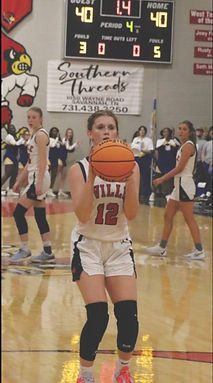
Adamsville's Kady Johnson
West Tennessee's Best Kept Secret
Kady Johnson is on pace to rewrite the record books at Adamsville High School—quietly, almost shyly, the way dawn rewrites the night, you just expect it to happen. When her career finally settles into the school’s history, she should stand as the all-time leader in assists, steals, three-pointers, and free-throw percentage, with only one name above hers on the scoring list. For three seasons, she has been a fixture—no, an anchor—in the Cardinals’ lineup, steering her team into last year’s District Championship Game with the calm, unflustered composure of someone older than her years. Around District 13AA, she is no secret at all. She has been such a good player from day 1, opposing coaches struggle to believe she is back again, asking Coach Austin this summer, with a mixture of resignation and awe, “She’s back again?” To which he’d grin and reply, “One more year.” Yet outside the district, her name slipped past the headlines and award lists as easily as she slips past defenders. Not one mention in end-of-season publications. Absent from BCAT’s players-to-watch list. And so, paradoxically, one of the best players in District 13AA remains the best-kept secret in West Tennessee. The kid can play—talented and ferocious. When I sat down with Kady and Coach Austin, I wasn’t sure what to expect. I’d watched her compete for three years, all sharp elbows and unyielding intensity, the sort of hard-nosed toughness you don’t teach so much as uncover. Yet in conversation, she shrinks from praise, as if compliments are bright lights she would prefer dimmed. Her beginnings were not heroic. She remembers starting youth league ball in Chewalla in third grade: “I cried every practice. I couldn’t get the ball to the basket.” She spoke of her first year at Savannah Christian Middle School, where she often sat on the bench in the beginning, hoping not to be called into action: “I didn’t know what to do. I was just hoping they wouldn’t put me in. I really started to like it in my 8th-grade year.” That was as far as she’d take the story—modesty tugging her back—until Coach Austin stepped in: “She scored over a thousand points in middle school. We couldn’t guard her.” She looked almost embarrassed to have the truth spoken aloud. Somewhere, much like the seed that lies dormant and then bursts forth, in those middle school years, something clicked, and the game opened a door to her, and she ran through. By the time she arrived at Adamsville as a freshman, she played not as a newcomer but as someone who had already been through the wars- certain, decisive, and every movement purposeful. “Ultra competitive,” is how Coach Austin describes her. “Nobody is going to outdo her, and if they do, she’ll figure out how to get back on top. She’ll play harder defense, maybe get a steal—whatever it takes. If there’s a loose ball, she’s going to get it even if she has to go through you.” It’s a quality that’s both instinctive and earned. It is this competitive spirit combined with an extremely high basketball IQ that has allowed her to become one of the best players in District 13AA for multiple years. Kady has always been a very physical player, and when asked about where that comes from, she said, “I play with boys a lot. When they're in the gym, I get in the pick-up games.” She is also an All-State soccer player, to which she said, “I like soccer, it really helps with footwork, and you don’t get in trouble when you bump into people.” Hours and hours of work have sharpened her edges. She trained with FSL several times a week during her sophomore year, played travel ball, and logged countless solitary hours in the gym, perfecting the whisper-soft arc of her shot. All the work and time, and how fast it passes, is not lost on Kady or Coach Austin, “One more year,” Coach Austin repeats, half in pride, half in disbelief. He says this may be one of the most talented teams he has coached, and Kady agrees, expressing how much she feels they have grown together. “This is our last chance, we returned most everybody, and we all know each other better this year. We are playing more together, I think we play more as a team than at the start of last year.” “Kady leads by example,” he says. “She’s willing to do the dirty work. First on the floor after a loose ball. I think we have a chance to do some things this year. She takes pride in competing and wears the bruises like badges of honor; she can usually tell you where each one came from.” Off the court, Kady is a model student, already thinking beyond her playing days. She hopes to stay close to the sports world as a physical trainer, a path that matches her quiet steadiness. When asked about playing in college, she answered with a simplicity that reflects her maturity: “I wouldn’t be anywhere without God; He gave me my ability. I’ve been blessed with many open doors. If the right opportunity comes, I’ll keep playing, but there are more important things—my faith, my family, and preparing for my career.” As the interview ended, she stood, thanked me politely, and reminded Coach Austin with a small smile, “Don’t lock the basketballs up. I’m coming back later to shoot.” And that is Kady Johnson—humble, hard working, competitive, and confident - entering her senior year, this final “one more year,” there are no promises, only the quiet cadence of her work. Maybe, by the time the season ends, West Tennessee’s best-kept secret won’t be a secret at all. -Eric Hampton
Kady Johnson before hitting a game winning FT v/s Mcnairy
Riverside's Jack Cupples
(Play A Little Longer)
Play a Little Longer: Jack Cupples By the numbers, the legend writes itself. A thousand points scored before most boys have found their stride, a 22-point-per-game scorer who tickles the nets everywhere he plays. Yet, to look only at the statistics would be to miss the finer brushstrokes. Jack Cupples, a junior who commands the floor as if it were his own small kingdom, rebounds like a center, guards like a thief in the night, and passes with the easy generosity of a boy who knows the game loves to be shared. Coach Sinclair, who has coached Jack since his sixth-grade year, says it plainly: “He’s known for his scoring, but he’s just as good on defense—an exceptional playmaker and ball handler.” Sinclair’s words hang with the weight of years — a coach who has seen this play out for many seasons. Beyond the gleam of numbers, there is a quiet coronation in Jack’s accolades: All-District, All-Region, District Player of the Year, Tournament MVP. A district championship banner already raised. His name whispered among those of Tennessee’s best — a possible Mr. Basketball finalist for 2A. The last article of his sophomore season crowned him among “The Biggest Snubs,” a compliment dressed as a complaint. And the strangest thing, perhaps the most telling, is that Jack Cupples is only now beginning his junior year. The ink is still wet on the first chapters. Yet when you talk to him, he doesn’t mention trophies or headlines. He talks about the district title. About the sting of that early region loss. About his team. “The goal is getting back to the District Championship and winning it,” he says with a calm conviction that feels older than his years. “We’re in a new district now, so it’d be great to win this one too. Last year we fell short in the region, so the goal is just to make a deeper run — to play a little longer.” That phrase — play a little longer — carries more weight than he might realize. It feels like a dream shared with the hardwood, a boy’s heart laid bare in sneakers and sweat. Jack’s story begins where many good basketball tales do: in the backyard. His father, Shawn, laughs, recalling the early years. “His mama used to put long yellow socks on him, so she could tell him apart out there. People’d ask, How do you not know your own kid? And she’d say, I’d lose him in the crowd.” Even as a kindergarten kid, his natural talent stood out. When he was dribbling everywhere with his right hand, they told him to only use his left, and he took off with it just as easily. His dad said, “That is when we first thought he was going to be pretty good.” Jack’s own words arrive with an easy humility: “My dad was big in it. He’d been a good player, and when you’re young, you want to do what your dad does. As I kept doing it, I developed a love for it. Had to watch all the old movies he used to watch back in the day.” He grins as he says it, the grin of someone both aware and grateful. He is, as we used to say, a porch light kid — the kind of boy whose game grows not under fluorescent gym lights but under the faint glow of a single bulb, shooting into the dark until the ball can no longer be seen. Though he loves getting in the gym, his game was born in the backyard. “When he wasn’t outside shooting, he was dribbling around all the furniture in the house,” his father says. “Drove his mama and sister crazy.” I hesitate to call him a throwback, but when we sat and talked, he grew up like us old heads; we shared stories with each other about breaking rims while shooting on them while they were frozen. But every good player needs a rival, and Jack had one close to home. His older brother, Jagger. “Some of our games ended in fights,” Jack admits with a laugh. “It was always physical.” Their shared seasons at Riverside, one a senior and one a freshman, ended in a one-point heartbreak, but they had already built the foundation for something lasting. Coach Sinclair sees the same spark every day. “His approach is what sets him apart. He takes every practice seriously — he’s locked in the whole time. That’s what’s driven his growth.” Jack attributes much of that mentality to his teammates, one in particular. He smiled and said, “Gavin McClain, we get after it, we have always been able to push each other to the limit and not take it personally. It really helps you be prepared for competition.” Now, as the Riverside Panthers chase another district crown — and that promise to play a little longer — Jack stands on the threshold of expectation. We talked about the pressure that comes with playing in a small town. You have unbelievable support, but at times, you also carry the burden of the town. When asked whether he ever feels any pressure, his answer gave me the greatest assurance that this young man will be just fine, no matter what the world throws at him. “You have a bad game, you hear chatter,” he says, “but that doesn’t affect me. Jesus is my rock, my foundation. I can leave all that with Him.” And there it is — the quiet steadiness beneath all the noise, resting in one bigger than any game. So as we attempt to write about the present, there is something timeless, something that reminds us of the legends of the past — and might yet be again. When next season rolls around, we’ll hope to find him still out there, beneath that bright gym light or that faint porch bulb, still playing, still growing, still chasing that simple, sacred wish: to play a little longer. -Eric Hampton
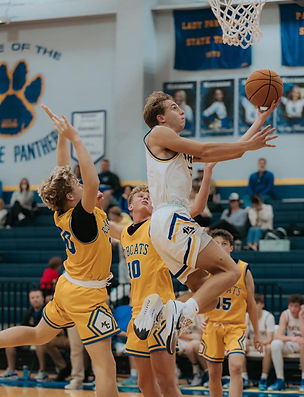

Greenfield's Rayanna Fisher
(From Hard Work to Hardware: 2x All-Stater Prepares for Junior Year)
Walking into the Glass House for the second round of the state tournament last season, I was looking forward to watching Greenfield play. My daughter had been teammates with two of the seniors from her brief travel-ball days, and I was hearing a lot about this sophomore guard named Rayanna Fisher. I had seen Richland at summer camps and was very impressed, so my initial thought (and I apologize to my Greenfield friends for thinking this) was, “It may be a long day for Greenfield.” As the game played itself out, this sophomore guard amazed me with the level of poise she played with. She personified the expression, “Cool as the other side of the pillow,” going 4-4 from the FT line in the 4th quarter. But it wasn't just the 4th quarter; throughout the game, any time Greenfield needed a big basket, this sophomore guard was up to the task. One of the most impressive things about watching her play was that she never got sped up, never rushed, always played at her own pace, did not have to force things, and allowed the game to come to her. This kind of patience on Tennessee basketball's biggest stage speaks volumes about the type of player Rayanna Fisher is. When the dust settled, Rayanna finished with a very efficient 23 points, including 4-7 from deep, five rebounds, two assists, leading Greenfield into the finals, where Rayanna and her teammates would go on to bring another Gold Ball home to Greenfield with a win over Van Buren in the Championship game. In just two seasons of High School basketball, Rayanna has already scored over 1,000 points, been named to the TSWA All-State Team twice, appeared twice at the Glass House, and brought home a Gold Ball. All this would be a great career for any player, but this young lady is just getting started, and after sitting down to talk with her, it becomes clear why she is poised to make more headlines over the next few years. As with many great basketball players, Rayanna’s interest in the game started with her family, she said, “Our family is really competitive. When I was little, it really started with my (older) sister and my uncle. We would go to my grandparents, and I’d play H-O-R-S-E against them outside, going back and forth competing. Ever since then, I’ve always played.” Rayanna started practicing with the middle school teams when she was in the 4th grade. One of the early influences on Rayanna was her middle school coach, Tory McNeil (Father of former Greenfield Standout Chloe Moore-McNeil), as she spent a lot of time with McNeil and his daughters in the gym during the summer months growing up. “Ever since I was little, he would tell me you're going to be a superstar when you grow up, and he’s been here whenever I need him.” Since those early years, Rayanna’s game has continued to blossom. Greenfield head coach Tori Liggett commented on her development, “She is the best athlete in the gym most nights, and her God given ability is just unreal. To go with that, she has put in a lot of gym time and has done a great job working on her shot. When she came up as a freshman she could beat people off the dribble but her shot wasn’t quite there yet, through hard work she greatly improved that aspect of her game” That time working on her shot paid great dividends in the State Tournament last season, when asked about her routine Rayanna said, “I usually start with ball-handling and during the week I’ll try to get up 300 shots and on Sundays I’ll try to make a 1,000” To a casual fan those numbers may not mean much but if your a part of the game you know just how crazy those numbers actually are. It's not just gym time and getting up shots, she also does training sessions with Joe Wiggins, “Oh my goodness, we usually work out in small groups and it's more than just ball handling and shooting, Joe teaches us how to see the game differently and we work a lot on live situations.” Coming into her Junior year, Rayanna will be taking on a bigger role. Always a great player, now she will be called upon to be a leader as well. “She is kind of a quiet kid, more of an observer, but she has started to be more vocal since we got back from the State Tournament and has accepted the leadership role this summer. It was a little out of her comfort zone, but she is finding her voice as we head into this season.” Coach Liggett said. There is more to this kid than just basketball. When you meet her, within minutes, you know there is something special about the way she carries herself. Outside of basketball, she is a 4.00 student with some interest in physical therapy, but that is all a plan B; for now, she is focused on plan A. “We want to win another championship, and I want to go as far as I can in basketball.” When asked what we would be the ultimate in a basketball career, she answered, “I want to do well enough to be able to give back to all the people that helped me and to give back to the community” If you listen to her you know this is true, she lights up talking about her family and those games of H-O-R-S-E, she lights up talking about her coaches and teammates, and although quite and shy… Still, there is a confidence and sincerity that make it easy to understand how a sophomore was so calm on such a big stage. I look forward to following the rest of Rayanna Fisher’s basketball career. It's going to be great, but I have a feeling she will go on to do great things long after the game! -Eric Hampton
Next Up: Riversides Jack Cupples
Photo Credit: Noah Smith
Good Ol' Boy Doing Good Things in Ivy League

Luke Gore: From Henry County, Tennessee to Princeton, New Jersey
Luke Gore has traveled many miles in his life pursuing his basketball dreams as both a player and a coach, but it is really the impact he has had on others' dreams that makes his story so special. This Henry County native has had stops at Cumberland, Bethel College, Notre Dame, Valparaiso, Wichita State, and now Princeton University in New Jersey, compiling an impressive personal resume with much success at each stop along the way. As great a basketball man as he is (and he is one of the best basketball minds I have ever met), the real story is in the many lives he has affected along the way, with mine being one of them. As a matter of fact, Luke was one of the first people I mentioned this crazy idea of an online sports page to, and in just five minutes of conversation, he convinced me I could do this. Like so many others, I can never thank him enough for his friendship and encouragement throughout the years. He has that unique ability to make anyone who spends time with him feel like he is the most important person in the room, and that ability truly makes him a “Good ol’ Boy.” Luke’s basketball journey began at Henry County High School in Paris, Tennessee, where he lettered in both basketball and soccer from 1993 to 1996. Clint Sisco, one of Luke’s coaches at Henry County, told me, “When I first met Luke, he was just a raw boned country boy who was always the hardest worker in the gym. I quickly learned he was one of the most intelligent players on our team as well.” After high school, Luke played both Basketball and Soccer at Cumberland University for two seasons. Luke then transferred back closer to home, playing basketball only at Bethel College. It is during the Bethel years that I first met Luke as we both arrived there in 1998. Luke was a phenomenal teammate and carved out a really nice playing career at Bethel as the starting power forward from 1998 to 2000. Luke was the guy who was tough as nails but also kind-hearted. I can remember two different instances on campus when things got a little chippy, and it was Luke who de-escalated both situations (one by running about 50 yards and spearing a guy off the top of a fight, which stopped the fight). It was also at Bethel where we find the first connection to Princeton. Our coach, Mike Neinabor, left for Christian Brothers after our Junior year. In a bind, Bethel hired former UT Martin coach Cal Luther as interim coach to replace him. Luther had spent some time at Princeton learning the offense under legendary coach Pete Carril. When he took over at Bethel, he implemented the Princeton offense during our senior year. One of the things he would always be yelling at practice was, “You gotta CUT HARD!!!” Not so ironically, the short video included at the top of this article is entitled "Hard Cuts." In Luke's senior year, he was named to the NAIA Academic All-American Team, and after graduation, he took a job at the University of Notre Dame, working in their recreation department. Ever the opportunist, Luke said of his time there, “One of my jobs was to keep all the fitness rooms clean. I found out that the basketball coaches all liked to work out around eleven in the morning, so I made sure I cleaned that room at eleven every day. So I got to know Notre Dame coach Mike Brey and his staff pretty well. I made it around to their practices every chance I could, and I learned a lot of good lessons that I still use today.” Luke was familiar with nearby Valparaiso University. His mother graduated from there in '66, and Coach Cal Luther was a '51 grad. So, when he got the opportunity to work with Rin Siebert in the recreational sports department, he took it. With his foot in the door at Valpo, he quickly took his position and parlayed it into a coaching position on Scott Drew’s staff, and the rest, as they say, is history. Over the next 20 years, Luke put in work daily and built a great career as an assistant coach and top recruiter, landing multiple top 100 players and playing a key role in over 387 wins (including a school record 30 wins in 2016). Luke’s time at Valparaiso was about so much more than wins and losses; it was about relationships and community. He was a part of the very fabric of that University and was a blessing to all who knew him. I was talking with Paul Oren, a freelance writer who runs a site called The Victory Bell, which covers all Valparaiso sports. He couldn’t say enough about what Luke meant to the University. He told me about a Zoom call he was having during COVID with former players, “I had all these guys on a Zoom call, and when they saw coach Luke, everyone's face just lit up, there was a genuine excitement to see him. That was the kind of relationship he had with the young men that played for him.” Luke went beyond his duties with the basketball team by working internationally with a group called Athletes in Action. In his own words, “So Athletes in Action is a Christian group that uses sport to spread God’s word, and they do it in a way of we're going to compete really hard and we’re going to carry ourselves like this and hopefully that shines a beacon throughout the world or wherever we’re going.” When Luke arrived at Valparaiso, he was a newlywed, and it wasn't long before he and his wife, Cheryl, were ready to start having a family. “We tried naturally for three or four years and nothing happened,” Luke said. “We started getting each other checked out, going to a fertility specialist and taking the different medicines.” When that didn't work, Luke and Cheryl started looking at options such as in vitro, but the more they looked into medical options, the more they felt a different pull. Hours of prayer led them to believe that adoption was the route God was putting before them. Through his experiences with Athletes in Action, Luke knew all too well the number of orphaned children in the world. “We knew that a lot of kids needed homes, and we felt like that was what God was calling us to do. Adoption was something that we always wanted, so we started researching.” Cheryl headed up the research, and after a lot of trials, disappointment, and waiting in 2012, they adopted their first child, Bartholomew (Bart) Ian Gore. A few years later, they got his sister, Christine Gore. As much as Luke and his family loved Valparaiso after 21 years, it was time for a change. Through some great relationships made in those 21 years at Valparaiso, Luke took a job as Director of Basketball Operations at Wichita State University, but this would be short-lived. After taking the Job in April, Princeton University came calling in August, and after a visit to the campus, Luke and his family were sold. Now Luke is serving as the Assistant Men's Basketball Coach and Recruiting Director at Princeton. In his two seasons there, Princeton has a combined record of 43-15 and an Ivy League regular-season championship in 2024. All the basketball accomplishments pale in comparison to the impact Luke makes on all who know him. Thirty years have passed since Luke and I were teammates, and we still talk weekly on a group text with all the Bethel guys. We also get together at least twice a year for Dove Hunts and Golf Trips. When we get together, there is a sincerity about Luke when he’s asking you, “How are you? How's your family? How are your parents?” It's not lip service but a genuine interest, and that is special. After talking with people from Valparaiso, I know he has the same kind of influence and impact on all who call him a friend. Oh yes, this West Tennessee legend, this good ol’ boy, this “Raw Boned” country boy, will continue to do good things in the Ivy Leagues and leave behind a legacy that lasts forever. -Eric Hampton